
You promoted your best salesperson. Now they're your worst leader.

Kelly's 2026 TELM study found that poor leadership is the second leading reason for resignations in Mexico, nearly tied with salary. This article explains why most of these leaders were promoted based on individual performance rather than people leadership skills, and what this means for how organizations should design their promotion processes.
Kelly's 2026 TELM study found that poor leadership is the second leading reason for resignations in Mexico, nearly tied with salary. This article explains why most of these leaders were promoted based on individual performance rather than people leadership skills, and what this means for how organizations should design their promotion processes.
Kelly's 2026 TELM study found that poor leadership is the second leading reason for resignations in Mexico, nearly tied with salary. This article explains why most of these leaders were promoted based on individual performance rather than people leadership skills, and what this means for how organizations should design their promotion processes.
Subscribe to our Newsletter for HR leaders
Workplace wellness strategies, success stories, and corporate promotions directly in your inbox.
Subscribe to our Newsletter for HR leaders
Workplace wellness strategies, success stories, and corporate promotions directly in your inbox.
You already know the data, but there is a question no one is asking
The Mexico Workplace Environment Trends 2026 study by Kelly found that poor leadership is the second leading cause of resignation in the country, just 13 points behind salary and above the lack of growth opportunities. Employees especially value empathetic and trustworthy leaders who have assertive communication and the ability to develop their team.
The conclusion almost everyone is repeating is that we need to train more empathetic leaders. That is true, and it is also incomplete. No one is asking how those people reached leadership positions in the first place.
This sounds like the Peter Principle
Most organizations promote someone to a leadership position based on their individual performance. The best salesperson becomes the sales manager. The most technical analyst becomes the department head. The decision makes sense at the time: that person proved to be excellent at what they did. The problem is that being excellent at executing a task and being capable of leading people are two completely different skills, and the first does not guarantee the second.
This has had a name in organizational theory for decades: the Peter Principle, the tendency of organizations to promote someone to their level of incompetence. The "bad leader" that the Kelly study talks about was almost always, at some point, an outstanding individual contributor.
Why this is a design problem, not a personality problem
When poor leadership is interpreted as a personality problem ("we need more empathetic leaders"), the proposed solution is post-promotion training. When it is interpreted as a promotion process design problem, the question changes completely: what are we evaluating before promoting someone—individual performance or the actual ability to lead people?
Most promotion processes evaluate the first variable almost exclusively. They rarely evaluate the second explicitly, and when they do, it is usually after the promotion, not before.
The cost that does not appear in the turnover report
Every poorly evaluated promotion doesn't just place someone unprepared into a critical role. It drives turnover that can be measured across the team under that person, even if the human resources report rarely connects that turnover to the promotion decision that caused it months earlier.
The early signs, before they turn into turnover
There are early signs that a promotion was decided based on individual performance rather than leadership capability. They usually appear months before the turnover becomes visible in any report. This week, in Thursday's carousel, we will break down 5 of those signs in detail.
Does your promotion process evaluate leadership ability, or just individual performance disguised as a promotion?
You may also like



Learn about our home delivery services
In-home massages and facials in several cities across Mexico

Customer favorite
Relaxing massage
Light to medium pressure
60, 90, and 120 min
· by therapist

Deep tissue massage
Strong, targeted pressure
60, 90, and 120 min
· by therapist

Sports massage
Firm and dynamic pressure
60, 90, and 120 min
· by therapist

Lymphatic drainage massage
Gentle and rhythmic pressure
90 and 120 min
· by therapist

Prenatal massage
Light, secure pressure
60 and 90 min
· by therapist
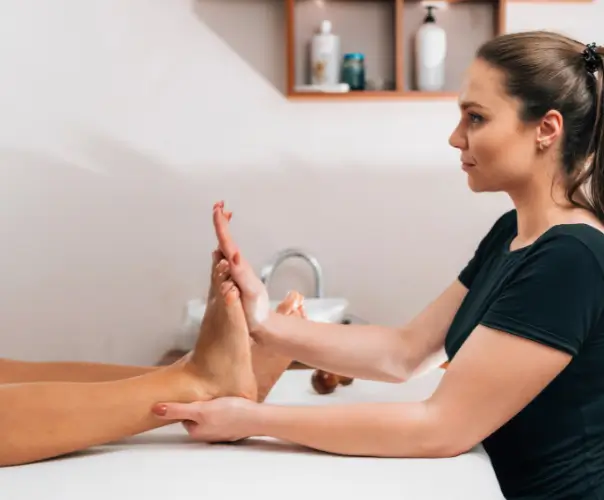
Reflexology
Gentle and rhythmic pressure
60 mins
· by therapist

Customer favorite
Couples Massage
Customized pressure for everyone
60, 90, and 120 min
· as a couple

Fiesta SPA
Massages and facials for your group
Request a quote
Learn about our home delivery services
In-home massages and facials in several cities across Mexico
Customer favorite
Relaxing massage
Light to medium pressure
60, 90, and 120 min
· by therapist
Deep tissue massage
Strong, targeted pressure
60, 90, and 120 min
· by therapist
Sports massage
Firm and dynamic pressure
60, 90, and 120 min
· by therapist
Lymphatic drainage massage
Gentle and rhythmic pressure
90 and 120 min
· by therapist
Prenatal massage
Light, secure pressure
60 and 90 min
· by therapist
Reflexology
Gentle and rhythmic pressure
60 mins
· by therapist
Customer favorite
Couples Massage
Customized pressure for everyone
60, 90, and 120 min
· as a couple
Fiesta SPA
Massages and facials for your group
Request a quote
Book my in-home massage
Our customer service often exceeds expectations, providing an unmatched experience.
Certified therapists from the best SPAs in the city
No penalties if you cancel 24 hours before your service.
7 out of 10 local customers return and become frequent customers.
Book my in-home massage
Our customer service often exceeds expectations, providing an unmatched experience.
Certified therapists from the best SPAs in the city
No penalties if you cancel 24 hours before your service.
7 out of 10 local customers return and become frequent customers.
Book my in-home massage
Our customer service often exceeds expectations, providing an unmatched experience.
Certified therapists from the best SPAs in the city
No penalties if you cancel 24 hours before your service.
7 out of 10 local customers return and become frequent customers.
Book my in-home massage
Our customer service often exceeds expectations, providing an unmatched experience.
Certified therapists from the best SPAs in the city
No penalties if you cancel 24 hours before your service.
7 out of 10 local customers return and become frequent customers.
We bring wellness to your doorstep. We conveniently and securely connect you with the city's top therapists, so you can say goodbye to stress.
Contact us via your preferred channel:
Zen to Go News
Wellness tips and exclusive offers.
Discover
Work with us
In-home massages
© 2019-2026 Zen to Go™. All rights reserved. Zen to Go is a registered trademark of Plataformas Zen México SA de CV.
Calle 38 Entre Av. 10 y 10 BIS, Local 12, Zazil-Ha, Playa del Carmen, Quintana Roo, CP 77720, México.