
The perk that only exists at the main office
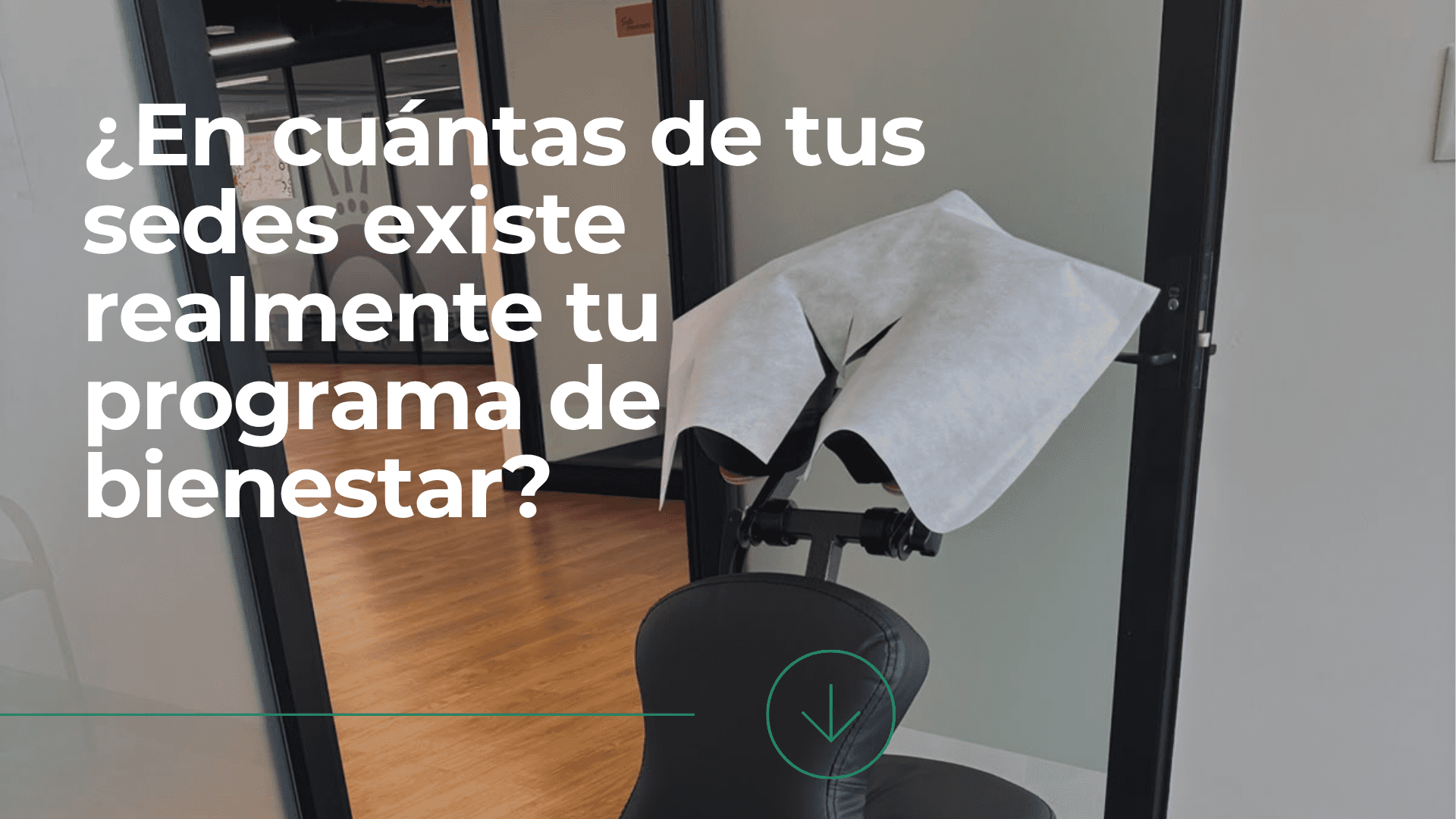
When corporate wellness only reaches one location, it can be perceived as a privilege. Here are three decisions to organize a multi-site program and six questions to evaluate a provider.
When corporate wellness only reaches one location, it can be perceived as a privilege. Here are three decisions to organize a multi-site program and six questions to evaluate a provider.
When corporate wellness only reaches one location, it can be perceived as a privilege. Here are three decisions to organize a multi-site program and six questions to evaluate a provider.
Subscribe to our Newsletter for HR leaders
Workplace wellness strategies, success stories, and corporate promotions directly in your inbox.
Subscribe to our Newsletter for HR leaders
Workplace wellness strategies, success stories, and corporate promotions directly in your inbox.
A wellness program usually starts where HR is located. It is tested at the headquarters, coordinated in person, and it works. Other locations are left “for next quarter,” and that quarter sometimes never comes.
It's usually not a deliberate choice. It's a consequence of how work is organized: whatever is close gets done first.
Why it matters more than it seems
A study published in Employee Relations analyzed which components of a benefits system influence employees' perceptions of fairness. It identified three dimensions with a strong influence: restrictions on accessing and using benefits, perceived fairness toward third parties, and transparency. The authors note that previous studies have shown that when benefits are perceived as unfair, there is a negative impact on engagement, performance, and retention.
That study doesn't look at office locations or massages. But it describes something that any people leader recognizes: a benefit that some people have access to and others do not, without an explained reason, can be seen as a privilege rather than care. This is a plausible interpretation, not a proven outcome for your company.
Three decisions that structure a multi-location program
1. Define the standard, not the frequency. A location with 15 people and one with 300 do not need the same number of sessions. They can, however, have the same standard: the same amount of time per person, the same scheduling method, and the same survey at the end. What is communicated is not “everyone gets the same amount,” but “everyone gets the same experience.”
2. A single coordination process. If each location solves it on its own with a local vendor, HR ends up with five quotes, five reporting formats, and five quality standards. A single process reduces the workload for the person coordinating it—which is the work most underestimated when approving the budget.
3. Measure by location. Participation by location is cheap and revealing data. A location with low participation doesn't necessarily have less interest. It could be an issue of communication, space, or scheduling. Identifying the cause before drawing conclusions is what prevents poor decisions.
Six questions for a provider with multi-city coverage
When comparing proposals, geographical coverage on a brochure isn't enough. It's worth asking:
Do therapists go through the same screening process in all cities?
Is there a single point of contact and a single quote for all locations?
Do employees book using the same tool at every location?
Is the survey the same, so that the results are comparable?
How is a small location serviced?
What happens if a therapist cannot attend?
The third and fourth questions matter more than they seem. Without a common tool and survey, there is no way to compare locations.
Where Zen To Go comes in
Zen To Go covers 12 cities across Mexico. Employees book their sessions in advance using a shared tool, the post-session survey can be customized to measure the metrics defined by the company, and therapists go through screening and coordination processes. In addition, block hours have tiered pricing that decreases with volume and can be used throughout the year.
But the logic applies to any provider. A multi-location program is judged by what reaches the farthest location, not the closest one.
A benefit that only exists where leadership is based is perceived as a privilege. The standard of a multi-location program is not the same frequency everywhere, but the same standard.
If you had to compare your wellness program's participation across locations, what data would you need that you don't have today?
You may also like



Learn about our home delivery services
In-home massages and facials in several cities across Mexico

Customer favorite
Relaxing massage
Light to medium pressure
60, 90, and 120 min
· by therapist

Deep tissue massage
Strong, targeted pressure
60, 90, and 120 min
· by therapist

Sports massage
Firm and dynamic pressure
60, 90, and 120 min
· by therapist

Lymphatic drainage massage
Gentle and rhythmic pressure
90 and 120 min
· by therapist

Prenatal massage
Light, secure pressure
60 and 90 min
· by therapist
Reflexology
Gentle and rhythmic pressure
60 mins
· by therapist

Customer favorite
Couples Massage
Customized pressure for everyone
60, 90, and 120 min
· as a couple

Fiesta SPA
Massages and facials for your group
Request a quote
Learn about our home delivery services
In-home massages and facials in several cities across Mexico
Customer favorite
Relaxing massage
Light to medium pressure
60, 90, and 120 min
· by therapist
Deep tissue massage
Strong, targeted pressure
60, 90, and 120 min
· by therapist
Sports massage
Firm and dynamic pressure
60, 90, and 120 min
· by therapist
Lymphatic drainage massage
Gentle and rhythmic pressure
90 and 120 min
· by therapist
Prenatal massage
Light, secure pressure
60 and 90 min
· by therapist
Reflexology
Gentle and rhythmic pressure
60 mins
· by therapist
Customer favorite
Couples Massage
Customized pressure for everyone
60, 90, and 120 min
· as a couple
Fiesta SPA
Massages and facials for your group
Request a quote
Book my in-home massage
Our customer service often exceeds expectations, providing an unmatched experience.
Certified therapists from the best SPAs in the city
No penalties if you cancel 24 hours before your service.
7 out of 10 local customers return and become frequent customers.
Book my in-home massage
Our customer service often exceeds expectations, providing an unmatched experience.
Certified therapists from the best SPAs in the city
No penalties if you cancel 24 hours before your service.
7 out of 10 local customers return and become frequent customers.
Book my in-home massage
Our customer service often exceeds expectations, providing an unmatched experience.
Certified therapists from the best SPAs in the city
No penalties if you cancel 24 hours before your service.
7 out of 10 local customers return and become frequent customers.
Book my in-home massage
Our customer service often exceeds expectations, providing an unmatched experience.
Certified therapists from the best SPAs in the city
No penalties if you cancel 24 hours before your service.
7 out of 10 local customers return and become frequent customers.
We bring wellness to your doorstep. We conveniently and securely connect you with the city's top therapists, so you can say goodbye to stress.
Contact us via your preferred channel:
Zen to Go News
Wellness tips and exclusive offers.
Discover
Work with us
In-home massages
© 2019-2026 Zen to Go™. All rights reserved. Zen to Go is a registered trademark of Plataformas Zen México SA de CV.
Calle 38 Entre Av. 10 y 10 BIS, Local 12, Zazil-Ha, Playa del Carmen, Quintana Roo, CP 77720, México.