Relaxing massage spa for companies: a guide for HR leaders
Implementing a relaxing massage spa program in the office is much more than an attractive perk. For an HR leader, it is a strategic tool that directly impacts stress reduction, work environment, and, consequently, productivity and talent retention. It is a tangible investment in emotional salary, aligning company culture with what employees in Mexico truly value today.
The Strategic Role of Massage in Modern Talent Management
For any HR professional in Mexico, the equation is clear: a stressed team is less productive, less innovative, and much more prone to turnover. Corporate wellness has ceased to be a nice-to-have to become a pillar of people management. We are no longer talking about superficial perks, but about tools that tackle root problems such as burnout, absenteeism, and lack of engagement.
In this context, implementing a relaxing massage program is a strategic action. It is one of the few initiatives that offers an immediate and measurable impact on the mood and energy of employees.
A Bridge Between Wellness and Business Goals
From our experience working with HR departments in companies of all sizes across Mexico, we have seen how this initiative connects directly with everyday major challenges. It is not just about giving a moment of relaxation, but about:
Proactively fighting workplace stress. Chronic stress is a silent enemy that affects decision-making, creativity, and collaboration. A massage is a preventive intervention, not a reactive one.
Strengthening emotional salary. In such a competitive job market, benefits that demonstrate genuine care for the individual are a key differentiator to attract and retain top talent.
Complying with NOM-035. A massage program is tangible evidence that the company is taking concrete actions to mitigate psychosocial risk factors.
In essence, an office massage is a statement of intent. It tells your team: "We understand the pressure and we care about your well-being. We are investing in your recovery because we value you."
This shift in focus is fundamental. HR goes from being an area that reacts to problems to becoming an agent of change that implements preventive, high-impact solutions.
The Tangible Impact of Corporate Massage in Mexico
The reality of the Mexican workplace demands practical solutions. Stress is not an abstraction; it carries real costs in productivity and health. In fact, it is estimated that in the Mexican corporate context, approximately 30% of employees experience workplace stress.
The good news is that targeted interventions can make a big difference. Relevant research suggests that an office massage of just 15 minutes can improve work performance by up to 25%. You can read more about the value of the wellness industry in this Milenio analysis.
At Zen to Go, we have directly validated these findings. Our internal data, based on semi-annual surveys, shows that after a session, 99% of employees feel that the company values their well-being, and we report an average stress reduction of 79%.
These figures are not just numbers; they represent a better work environment, greater loyalty, and more resilient teams. The benefits of massage therapy go beyond relaxation, directly impacting the employee's comprehensive health.
How to Choose the Ideal Massage Modality for Your Company
Selecting the right type of massage is much more than a logistical decision; it is a statement of intent. As a strategic HR partner, you know there is no one-size-fits-all solution. The perfect choice depends on very specific factors: your company culture, available space, and, of course, your budget.
It's not just about offering relaxing spa massages, but integrating them smartly into work dynamics. Let's break down the most practical and effective options for a corporate environment, always keeping in mind ease for you and maximum benefit for your employees.
Desk Massage: High Impact, Minimal Disruption
Imagine a high-density environment, such as a contact center or an operations area where every minute counts. Here, stopping the workflow is nearly impossible. The desk massage was born precisely for this scenario.
A certified therapist moves discreetly between workstations, offering 10 to 15-minute massages focused on the neck, shoulders, and upper back. Exactly the areas that suffer the most after hours in front of the computer.
No disruptions: The employee doesn't even need to get up from their chair.
Simple logistics: Does not require complex scheduling or additional spaces.
Immediate impact: Delivers quick, visible relief, energizing the team without affecting operations.
This modality is ideal for companies looking for a direct, almost instantly implemented token of appreciation, especially during peak demand periods or quarterly closes.
The Shiatsu Chair: The Gold Standard for Events and Offices
The Shiatsu chair is undoubtedly the most popular and versatile modality for corporate wellness. It offers a deeper experience than a desk massage while remaining incredibly practical.
It works wonders in common areas such as unoccupied conference rooms, break areas, or even a quiet corner of the cafeteria. It is perfect for wellness events, health weeks, or as a recurring perk that breaks the routine.
In our experience, the Shiatsu chair strikes a perfect balance. It provides a feeling of "escape" and disconnect without the need for a private space, making logistics immensely easier for HR.
The recommended duration is 15 to 20 minutes per person. This allows a single therapist to attend to a significant number of employees in a workday, maximizing the program's reach.
The Massage Table: The Premium Experience of Total Disconnection
When the goal is to offer a full spa experience and deep disconnection, the massage table is the undisputed choice. It is the premium modality, ideal for pampering high-performance teams, as part of a recognition program, or for the organization's leaders.
This option does require a quiet, private space, such as a lactation room, an unoccupied office, or a first-aid room.
Immersive experience: Allows for a more complete massage, using oils and techniques that induce deep relaxation.
Extended duration: Sessions typically range from 25 to 50 minutes, ensuring complete muscular and mental recovery.
High perceived value: Positions the company as an employer that seriously invests in the overall health of its people.
Although logistically more demanding, its impact on emotional salary and the perception of organizational culture is immense. If you want to dive deeper into the different techniques, we invite you to explore our guide on the different types of massage and their specific benefits.
To help you make the best decision, we have created this comparison table summarizing the key features of each modality.
Comparison of Corporate Massage Modalities
Modality | Ideal for... | Recommended duration | Space required | Key HR advantage |
|---|---|---|---|---|
Desk Massage | High-density environments (e.g., call centers), quick appreciation tokens, high-demand periods. | 10-15 min | None (performed right at the employee's desk). | Maximum reach with minimal operational disruption. Easy to implement. |
Shiatsu Chair | Wellness events, health weeks, recurring programs, common areas. | 15-20 min | A semi-private area or quiet corner (approx. 2x2 m). | The best balance between experience, logistics, and cost. Highly versatile. |
Massage Table | Recognition for key teams, executive perks, deep disconnection programs. | 25-50 min | A private, quiet room or office with a door. | Maximum impact on emotional salary. Premium and memorable experience. |
Choosing the right modality is the first step toward building a wellness program that is not only appreciated, but also yields measurable results in your company's atmosphere and productivity.
Planning a Wellness Day Your Employees Will Love
Organizing a relaxing massage spa day does not have to be a logistical nightmare. With clear planning, you can transform a good idea into a memorable experience that your team truly values. The key is to think like an HR strategist, aligning every step with business objectives and, of course, with your people's needs.
From experience, after partnering with hundreds of companies in Mexico, we have learned that the success of these initiatives lies in the details. It is not just about hiring therapists, but about building a seamless experience from the initial communication to the final satisfaction survey.
Defining Your Strategic Objectives
Before checking calendars or requesting quotes, the first question is simple: what are we aiming to achieve with this? The answer will define everything else, from the type of massage to the communication tone.
Your goals might be:
Reducing stress during peak workloads: Ideal ahead of a quarterly close, an audit, or a major project launch. Here, massage is not a luxury; it is a resilience tool.
Rewarding and recognizing achievements: Celebrating a team's success with wellness has a much greater impact on emotional salary than a bonus. It sends a message saying: "we value your effort."
Enhancing a corporate event: Integrating massages into your health week, annual offsite, or year-end party elevates the perception of the event and demonstrates genuine attention to detail.
Improving the work environment: Sometimes, the goal is simply to break the routine, offer a real pause, and spark positive conversation among teams.
Being clear about this "why" will not only help you justify the budget, but also measure success much more effectively.
Communication Is Key to Success
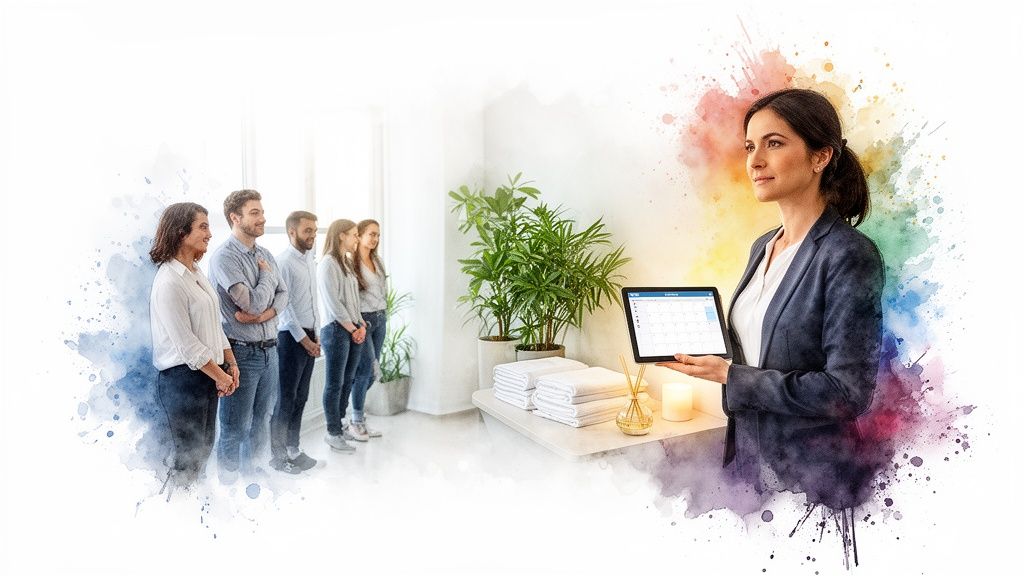
A well-executed internal communication campaign is the difference between mediocre participation and a full schedule with a waiting list. Sending a mass email is not enough; you need to build anticipation and remove any friction around signing up.
A key takeaway from our field experience is that anticipation is a powerful driver. When employees feel that the company has prepared something special for them, the appreciation of the perk multiplies even before receiving the massage.
Think of a simple yet effective campaign:
Initial Announcement (Teaser): A couple of weeks prior, launch an announcement introducing the wellness day and explaining the "why" behind the initiative.
Registration Launch: Roll out the booking system, clearly explaining how it works, session durations, and any relevant logistical details.
Reminders: An automated system sending reminders 24 hours in advance is essential to reduce no-shows and ensure everyone takes advantage of their slot.
This approach not only maximizes participation, but also positions the HR department as a proactive facilitator of well-being.
Hassle-Free Logistics: A Practical Checklist
Coordination with your provider is crucial. An experienced partner like Zen to Go will make the process much easier, but as an HR leader, having a clear checklist will give you peace of mind and ensure everything runs smoothly.
Coordination Checklist:
Date and time definition: Choose periods with lower operational loads. Tuesdays and Wednesdays usually see great adoption since they break up the week. Avoid Mondays (heavy planning load) and Fridays (many are already thinking about the weekend).
Space selection: Look for a rarely used conference room, a private office, or even a quiet area in an open space. The important thing is that it is away from noise to maximize relaxation.
Therapist confirmation: Confirm how many therapists will attend to calculate the maximum service capacity for the day.
Supplies validation: Your provider must guarantee they bring everything: chair or table, disposable sheets, hand sanitizer, relaxing music, and aromatherapy. This frees you from any operational burden.
Booking workflow: Use an online platform. This avoids the chaos of Excel sheets and allows employees to choose the time that suits them best, giving them autonomy. Learn more about how a well-organized spa service can optimize your event.
This interest in wellness is no coincidence. The spa market in Mexico has seen impressive growth, positioning the country as a leader in wellness tourism across Latin America. In 2023, this market reached a value of approximately 122.39 million dollars, reflecting a growing demand for services that promote health at both personal and corporate levels.
At the end of the day, detailed planning ensures the experience is just as relaxing for you as it will be for your employees.
What to Look for in a Corporate Massage Provider
Choosing your partner to implement a spa-style relaxing massage program is one of the most important decisions you will make in your wellness strategy. It's no exaggeration. Your operational peace of mind and, even more importantly, the trust and safety of your employees depend on this choice.
It is not just about hiring a service, but about building a partnership with a provider that truly understands your corporate culture and shares your standards.
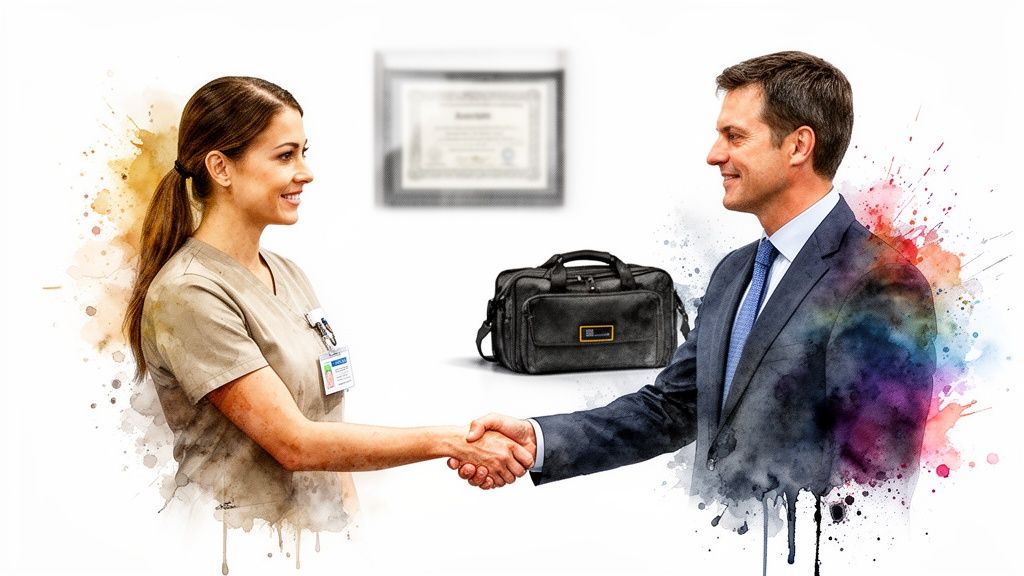
Based on our experience working side by side with HR departments since 2019, we have identified criteria that are simply non-negotiable. These points are what make the difference between a memorable experience and a logistical headache.
Therapist Experience and Certification
The heart of any massage service is undoubtedly the quality of its therapists. There are no gray areas here: they either meet the standard or you don't move forward.
Ask directly about their selection processes and how they validate credentials. A professional provider must be able to guarantee that every therapist on their team has:
Official, up-to-date certifications: Documents certifying their training in various massage techniques. "Knowing how to give massages" is not enough.
Verifiable experience: A track record of years of practice, ideally in corporate or high-end spa settings.
Continuous training: Do they have internal programs? This ensures service quality is consistent and everyone maintains the same level of professionalism.
At Zen to Go, for example, our screening process is rigorous. We only collaborate with therapists who pass psychometric tests, background checks, and have a minimum of 3 years of experience. This is how we ensure that every interaction with your people is safe, respectful, and of the highest caliber.
Logistical Capacity and Geographic Coverage
Does your company have multiple offices? Are you planning events across different cities? If so, the provider's geographic reach is essential. A partner with nationwide presence simplifies your life, ensuring the quality standard is identical in CDMX, Monterrey, or Guadalajara.
The big difference between an established provider and a freelance network is scalability. You need an ally capable of managing a 50-person event just as effectively as a 500-person one, coordinating therapists, equipment, and logistics without you having to worry about the details.
Additionally, ask about their ability to adapt to different environments. Setting up a space in an office is not the same as in a convention center or at an outdoor event. Operational flexibility is a key indicator of their experience.
Insurance and Safety Protocols
This is a critical aspect that is surprisingly often overlooked. A reputable provider must carry general liability insurance policies covering any eventuality during the service. This protects you, your company, and, of course, your employees.
Don't hesitate to request documentation and make sure it is current. This not only demonstrates professionalism, but also gives you the peace of mind that you are working with a company that takes safety very seriously.
The wellness industry in Mexico is robust. There is a high concentration of professionals in regions like the State of Mexico and Mexico City, and the average age of therapists is around 36-37 years old, pointing to an experienced workforce. However, what truly guarantees compliance with the highest standards is the formality and backing of an established platform. If you want to explore further, you can check out the demographic data of the personal care industry in Mexico.
At the end of the day, your wellness provider should act like an extension of your HR team: reliable, professional, and entirely focused on improving your people's experience.
How to Demonstrate the ROI of Your Wellness Program
For any Human Resources leader, one of the most challenging conversations revolves around budget. We know that initiatives like spa-style relaxing massages have a huge impact on people, but for your program to not only survive but grow, you need to speak the language of leadership: return on investment (ROI).
Don't worry, you don't need to become a financial expert. The key lies in connecting the dots between your team's well-being and hard business metrics, such as productivity and retention. Proving the value of your program is simpler than it seems when you combine the right metrics.
Quantitative Metrics: Data That Speaks for Itself
Numbers are your best allies when building a solid business case. They are objective, clear, and hard to dispute. The trick is measuring the before and after of implementing your massage program.
Here are some key metrics you can start tracking:
Post-session satisfaction surveys: This is a goldmine. With questions as simple as "How would you rate your stress level before and after the massage?" you gather powerful data. At Zen to Go, our semi-annual surveys yield compelling numbers: a 79% stress reduction after a session.
Absenteeism rate: Compare absenteeism records from the quarter prior to implementation with the quarter after. A reduction, no matter how small, translates directly into recovered productivity hours.
Participation rate: A high utilization rate (for example, more than 80% of available slots booked) proves it is a valued benefit addressing a real team need.
Voluntary turnover rate: Track this especially in teams or departments where the massage program was launched as a pilot. If you observe key talent turnover dropping, you have a very strong financial argument.
One figure that directly impacts leadership is this: according to our data, 99% of employees who receive an in-office massage report feeling more valued by the company. That sense of valuation is the core foundation of engagement and loyalty.
Qualitative Metrics: Stories That Humanize the Data
Numbers tell part of the story, but it is your employees' voices that provide the emotional, human context that truly persuades. Qualitative data is just as important to demonstrate the impact on company climate and culture.
Do not underestimate the power of gathering and presenting this information in a structured way.
Ways to capture qualitative feedback:
Written or video testimonials: Ask employees to share in a sentence or two how they felt after their massage. Statements like "It was the break I needed to recharge my energy and finish my day more focused" are incredibly persuasive.
Focus Groups: Host short sessions with a representative group of employees to discuss the program's impact on their daily routines. This will give you insights into how wellness is influencing team morale and collaboration.
Direct observation: As an HR leader, your perception is valuable. Notice if there is a shift in the atmosphere, if people seem more relaxed, or if positive conversations emerge around the initiative.
Structuring Your Executive Report
Once you have your quantitative and qualitative data, it is time to present them clearly and compellingly. Your report should not be a long, dense document, but an executive summary that gets straight to the point.
Recommended Structure:
Executive summary: A paragraph summarizing the program's objective and key results.
Quantitative results: Use simple charts to show stress reduction, satisfaction improvement, or decrease in absenteeism.
Qualitative impact: Include two or three of the best testimonials from your employees.
Connection to business goals: Explain how these outcomes support broader goals, such as "reducing turnover by 5% this year" or "improving our eNPS by 10 points."
Recommendation: Close with a clear proposal to continue or expand the program, justifying the required investment.
By presenting wellness as a strategic investment rather than an expense, you not only secure the future of your program, but you also reinforce your role as a key partner in business success.
Answering the Most Common Questions About Office Massages
Implementing a spa-style relaxing massage program at your company is one of those high-impact decisions that mark a before and after. However, it is completely normal for questions to arise along the way.
As your allies in corporate wellness, we have compiled the most frequent questions we hear from HR teams in Mexico. We want to provide you with total clarity so that implementation is as relaxing as the massages themselves.
Do my employees need to undress?
The answer is an emphatic no. The most effective and practical modalities for an office environment, such as the Shiatsu chair massage and desk massage, are designed to be performed over clothing.
This removes any potential discomfort and ensures the experience is accessible and professional for everyone, always respecting company culture and individual boundaries.
This is a critical point for internal communication. Clarifying from day one that massages are received fully clothed helps break down barriers and encourages more people to join the initiative.
How long is each session and how often should we hold them?
The duration of each massage depends on the chosen modality and your goals. Typically, chair or desk sessions last between 15 and 20 minutes. It is the ideal timeframe to release built-up tension in the neck, shoulders, and back, leaving the person feeling refreshed without significantly disrupting their workday.
The ideal frequency largely depends on budget and the needs of each team. Some companies offer it monthly as an ongoing benefit, while others reserve it for strategic moments:
Quarterly: Ideal to align with fiscal or sales closings to relieve pressure.
During special events: As part of Health Week, anniversaries, or end-of-year celebrations.
As a reward: To recognize teams that exceeded their goals.
A helpful tip is to start with a pilot day. Gauge the team's response and use that data to fine-tune the frequency.
How are employees' medical conditions handled?
Safety always comes first. Before starting any session, our therapists conduct a brief, confidential verbal check-in. They ask about any relevant medical conditions, such as recent injuries, back problems, or pregnancy.
This allows us to adapt the technique and massage pressure to ensure the experience is safe and genuinely beneficial for each individual. All our staff is trained to handle this information with the strictest confidentiality.
What professionalism and confidentiality protocols do you follow?
Our therapists are certified professionals who operate under a strict code of ethics. We fully understand that we are inside your workplace; therefore, respect, discretion, and professionalism are non-negotiable.
Any information shared by an employee during their session remains completely confidential. Our team is solely focused on delivering therapeutic service of the highest quality, consistently maintaining conduct that builds trust in the program and in your HR department.
Transforming your company culture through wellness is an investment in your most valuable asset: your people. At Zen to Go, we are experts in designing and executing corporate massage programs tailored to your needs, ensuring a flawless experience for both you and your employees.
Discover how we can help you build a healthier, more productive workplace.