Negative attitudes and how to manage them from HR.

As an HR professional in Mexico, you know that a company's true engine is its people. However, certain negative attitudes can act like a handbrake, affecting the work environment, decreasing productivity, and increasing turnover. Often, these behaviors are not malicious, but rather the reflection of an organizational culture that does not prioritize well-being or effective communication.
In our experience working with HR departments of various sizes across Mexico, we have seen how identifying and managing these attitudes is key to building a strong and resilient culture. The first step to solving a problem is recognizing it and understanding its real impact on day-to-day operations and team morale.
This article will not only give you 8 negative attitudes with concrete examples that you will surely recognize from your day-to-day life, but it will also offer you a practical framework to transform them into opportunities for improvement. We will analyze each behavior, its impact on the team, and provide actionable recommendations to manage them, strengthening engagement and demonstrating the strategic value of your role. Get ready to turn these challenges into catalysts for positive change.
1. Resistance to Change and Rejection of Corporate Well-Being
One of the most common negative attitudes in the workplace is resistance to change, especially when it comes to new initiatives such as wellness programs. This attitude manifests when leaders or employees perceive wellness proposals as an unnecessary expense, a distraction from "really important" tasks, or simply a passing fad with no real impact. This initial skepticism can slow down the adoption of programs designed to improve the work environment, reduce stress, and ultimately increase productivity.
To overcome this barrier, it is crucial to understand that well-being is a key component of modern organizational culture. It is not just about isolated perks, but about a comprehensive strategy that addresses employees' current needs. In this context, transformation is not only technological; it is cultural. To delve deeper into how to prepare an organization for evolution, you can consult this complete guide on digital transformation, which offers a comprehensive view of change.
Analysis and Implementation Strategy
To overcome this resistance, HR professionals must act as strategists, presenting well-being not as a cost, but as an investment with measurable returns.
Start with a Controlled Pilot: Instead of launching a large-scale program, implement a pilot test. For example, a day of Zen to Go Shiatsu chair massages in a single department. This minimizes disruption and allows you to gather concrete data on its impact to justify the budget.
Demonstrate ROI (Return on Investment): Use satisfaction surveys before and after the pilot. Ask about stress levels, energy, and perception of company support. Data such as a 79% reduction in perceived stress can be powerful arguments for leadership.
Focus on Quality: A common mistake is opting for low-quality solutions that reinforce the idea that wellness is "superficial." Highlight that Zen to Go therapists have more than 3 years of certified experience, guaranteeing a professional service that employees will value. By demonstrating quality, trust in the initiative is built.
Understanding in detail what workplace well-being is and what it entails is the first step toward effectively communicating it and overcoming these negative attitudes.
2. Lack of Priority on Staff Mental and Physical Health
Another of the negative attitude examples that most impacts the work environment is when leaders minimize the importance of their teams' comprehensive health, focusing almost exclusively on short-term financial goals. This outdated mindset creates a high-pressure environment, increases absenteeism due to burnout, and drastically reduces the quality of work. Ignoring well-being is a clear sign of a weak organizational culture that, in the long run, harms talent retention.
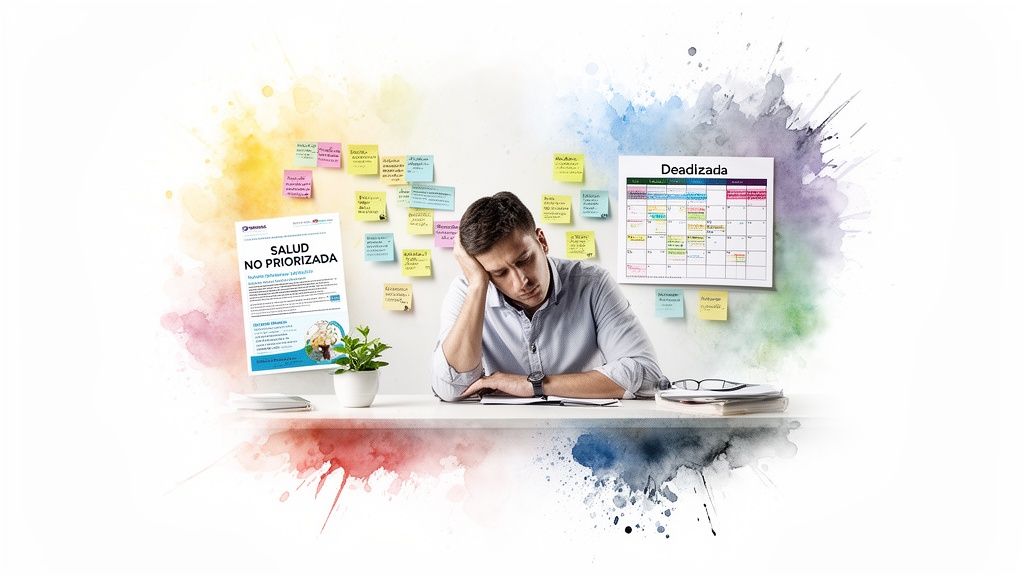
Neglect in this area is not only a human error, but also a strategic one. In our experience, companies in CDMX and Monterrey that implement consistent wellness programs, such as Zen to Go massages, report measurable improvements in retention and engagement. Understanding psychosocial risk factors at work, as required by NOM-035, is fundamental for HR to design effective interventions and justify investing in people.
Analysis and Implementation Strategy
To transform this mindset, HR must position well-being as a driver of productivity, not as an expense. The key is to present data and tangible results.
Educate on the Well-Being–Productivity Correlation: Present case studies and statistics to leadership showing how mental and physical health directly impacts business results. A well-rested and valued team is more innovative and efficient.
Offer Free Demo Sessions: One of the most effective tactics is to let leaders experience it firsthand. Coordinating a desk massage session for the executive team can radically change their perception by allowing them to feel the benefits directly.
Implement Monthly, Measurable Programs: Instead of isolated initiatives, propose a consistent monthly program. For example, a massage day on the last Friday of each month. This builds a positive habit and demonstrates a real commitment from the company, strengthening emotional salary.
Share Employee Testimonials: Collect testimonials after each session. Statements like "I felt the company truly cares about me" or "I was able to focus much better after the massage" are powerful tools to justify continuing and expanding the program.
3. Cynicism and Distrust in Service Providers
Another of the negative attitude examples that HR departments frequently face is cynicism toward external service providers, such as corporate wellness providers. This distrust stems from past negative experiences, the perception that they are "snake oil" solutions, or the fear that the promised quality will not materialize, damaging the talent department's credibility with both employees and leadership. This barrier prevents companies from accessing specialized solutions that could positively transform their culture.

As HR professionals, we completely understand this skepticism, especially when budgets are tight and the pressure to deliver results is high. However, the right strategic partner does not just deliver a service; they become an extension of your team, ensuring flawless execution and measurable impact. The key lies in knowing how to distinguish a transactional vendor from a business partner committed to employees' genuine well-being.
Analysis and Implementation Strategy
To overcome cynicism and build a relationship of trust, it is essential for providers to demonstrate transparency and professionalism from the very first contact. As HR leaders, we must establish clear criteria to validate their reliability.
Verify the Selection Process: A quality provider must have a rigorous recruitment and training process. For example, at Zen to Go, every therapist goes through multiple screening stages, including interviews, technical tests, and verification of their more than 3 years of certified experience.
Request References and Profiles: Do not hesitate to ask for references from companies of a similar size to yours that already trust the service. A reputable provider will provide verified profiles of the assigned therapists so you know exactly who will be attending to your team.
Establish Service Guarantees: Trust is built on facts. Agree on a satisfaction guarantee that includes, for example, replacing the therapist if they do not meet expectations. This demonstrates the provider's commitment to quality and minimizes risk for your company.
4. Impatience and Unrealistic Expectations About Results
Another of the negative attitude examples that frequently sabotages the best wellness intentions is impatience. Leaders or even the HR team itself expect immediate, transformational results, such as a drastic reduction in absenteeism or an explosive increase in engagement, after a single activity. When these deep changes do not materialize instantly, the initiative is labeled "ineffective" and discontinued, wasting the investment and reinforcing skepticism.
This attitude reflects a lack of understanding of how wellness actually works: its most significant benefits are cumulative and built through consistency. A wellness program is not an isolated event, but a sustained strategy that nurtures organizational culture over time. Expecting a miracle cure from a single action is like expecting to get in shape after a single visit to the gym; it is simply not realistic.
Analysis and Implementation Strategy
To combat this impatience and manage expectations, HR professionals must frame wellness as a medium- and long-term strategy, educating leadership on the importance of consistency.
Design Sustained Programs: Instead of one-off events, propose a monthly or quarterly schedule model. For example, recurring Shiatsu chair massage sessions every two weeks. This encourages regularity and allows the benefits to compound.
Set Clear and Progressive Metrics: Define what will be measured and when. Start with immediate impact metrics (post-session satisfaction, perceived stress reduction) and then move toward long-term indicators (retention rates, absenteeism data). Data such as 99% of employees feeling that the company values their well-being after a session provides an excellent starting point.
Assign Consistent Follow-Up: To ensure success and continuity, having a follow-up plan is vital. At Zen to Go, we assign a dedicated account manager who collaborates with HR to monitor the program, collect feedback, and adjust the strategy, ensuring that goals are met progressively and visibly.
5. Exclusivity and Perceptions of Elitism in Wellness Benefits
One of the most dangerous negative attitudes for organizational culture is the perception that wellness programs are an exclusive privilege reserved for upper management. This attitude arises when benefits, such as massages or access to coaches, are concentrated at executive levels. This practice not only breeds resentment and distrust, but also fractures team cohesion and communicates a message of inequality that undermines any effort to build a positive work environment.
For HR professionals, combating this perception is crucial. A wellness program is only effective if it is perceived as inclusive and accessible to everyone, regardless of rank. It is an integration tool, not a segregation tool. By democratizing access to wellness, companies reinforce a powerful message: every employee is valuable, and their health matters.
Analysis and Implementation Strategy
To eradicate the perception of elitism, HR must design and implement programs with equity as a core pillar.
Implement Benefits Visible to Everyone: Start with high-impact, easily accessible solutions, such as Shiatsu chair massage days in common areas. By bringing wellness directly into everyone's workspace, both the physical and symbolic barriers of an "exclusive club" are eliminated.
Create a Rotation Schedule: For more personalized benefits, such as table massages, organize a rotation schedule by department. Clearly communicate dates and ensure all teams get their turn, demonstrating an organized commitment to equality.
Leverage Corporate Events: Use events such as company anniversaries, end-of-quarter milestones, or year-end parties to offer wellness services to the entire staff. It is the perfect opportunity for everyone to experience the benefits together, boosting collective morale.
Transparent Communication: From the launch, emphasize that the wellness initiative is designed for 100% of the organization. Use internal channels to highlight that the goal is to care for all talent, reinforcing the idea of a culture of mutual support.
6. Unnecessary Austerity and Wellness Budget Cuts
One of the negative attitudes with the clearest examples in executive management is misguided austerity, which views corporate wellness as a superficial expense and the first candidate to be cut during times of financial pressure. This short-sighted view, often driven by finance departments, ignores that investing in employee well-being is a key defensive strategy that protects against much higher long-term costs, such as absenteeism, high turnover, and productivity drops.
This "false economy" mentality stems from a failure to understand the tangible return on investment (ROI) of wellness programs. By eliminating these initiatives, the company not only saves a minor budget item, but also demotivates teams, increases the risk of burnout, and deteriorates the work climate. Treating well-being as a luxury rather than an operational necessity is a strategic mistake that directly impacts business profitability and sustainability.
Analysis and Implementation Strategy
For HR professionals, justifying the wellness budget in the face of an austerity mindset requires a data-driven approach. It is not about asking for an expense, but about defending an investment.
Present a Clear Investment Model: Instead of talking about "expenses," frame the proposal as an investment. Calculate the annual cost of absenteeism (lost days x average daily wage) and compare it to the cost of a wellness program like Zen to Go. Demonstrate how a controlled cost per employee generates compounding benefits in productivity and retention.
Offer a Scalable Structure: Propose a controlled start. A pilot chair massage program in a specific department is a low-cost option that allows you to measure immediate results. This demonstrates value without committing a large upfront budget, making approval easier.
Optimize the Budget with a Strategic Partner: Rely on an account manager, like those provided by Zen to Go, to design a plan that maximizes every peso. They can help you structure a monthly program that leverages volume discounts, reducing the unit cost and ensuring the investment fits the company's needs and capabilities.
7. Inflexibility Toward Individual Needs and Diversity
Another of the negative attitude examples we frequently see is inflexibility. It manifests when wellness programs are implemented with a "one-size-fits-all" approach, ignoring the diverse needs and preferences of the staff. A rigid program that fails to consider varying ages, health conditions, or job roles generates distrust and low participation, as employees feel the initiative was not designed with them in mind.
This lack of personalization is a major barrier. When an employee with a back injury is forced to participate in an intense physical activity, or when only one type of massage is offered that doesn't appeal to the majority, the program feels like an obligation rather than a genuine perk. This rigidity can be more damaging than offering nothing at all, as it creates a negative impression of the company's true commitment to caring for its people.
Analysis and Implementation Strategy
To prevent inflexibility from sabotaging your efforts, HR's role is to act as a facilitator who listens and adapts the wellness offering. The key lies in providing options and flexibility, demonstrating genuine interest in individual needs.
Conduct Preliminary Surveys: Before launching any initiative, distribute a simple survey to learn team preferences. Ask what types of activities interest them, what schedules work best, and whether they have any physical limitations or special needs.
Provide Multiple Options: Instead of imposing a single modality, present a menu of options. For instance, when organizing a massage day with Zen to Go, you can offer both Shiatsu chair massage and relaxing desk massage, allowing each person to choose according to their comfort and preference.
Adjust on the Fly: Actively communicate that the program is flexible. Encourage participants to provide feedback and make adjustments based on their input. Allowing an employee to change therapists or adjust the massage pressure shows that the company values their individual experience.
8. Neglect in Communication and Lack of Employee Involvement
One of the negative attitude examples that most sabotages wellness initiatives is neglect in communication. It occurs when a wellness program is implemented without a clear plan to inform or involve employees. When staff members do not understand the benefits or feel the program wasn't designed for them, the result is low participation and a negative perception of the effort, seeing it as an imposition rather than a real benefit.
The underlying problem is treating communication as an afterthought rather than a central part of the strategy. A wellness program, no matter how excellent, will fail if employees do not know why it is being offered, how it works, or what is expected of them. This lack of transparency erodes trust and negates the potential of the investment, turning an act of care into a source of confusion or apathy.
Analysis and Implementation Strategy
For a wellness initiative to succeed, HR professionals must act as communication facilitators, ensuring that the message arrives clearly and promptly.
Proactive and Specific Communication: Before launching the program, communicate the concrete benefits. Instead of a generic email, send targeted messages explaining how massages, for example, can help reduce stress associated with specific roles.
Involve Employees in Planning: Participation generates commitment. Run short surveys so teams can help choose the best times or preferred types of massage. This creates a sense of ownership and ensures the program aligns with their real needs.
Leverage Technology to Simplify: Use tools like the Zen to Go platform to send automated reminders and streamline appointment management. This reduces the administrative burden on HR and ensures employees don't forget their sessions, boosting participation rates.
Share Results and Encourage Feedback: After the first few sessions, share testimonials and positive data, such as the percentage of stress reduction. Publicly celebrate participation and create channels for feedback, showing that employees' opinions are valued.
Effective communication is essential to knowing how to improve the work environment and ensuring that wellness investments deliver the desired impact.
Comparison of 8 Negative Attitudes in Workplace Well-Being
Attitude | 🔄 Implementation (complexity) | ⚡ Resources Required | 📊 Expected Results | Ideal For (use cases) | ⭐ Key Advantage / 💡 Recommendation |
|---|---|---|---|---|---|
Resistance to Change and Rejection of Corporate Well-Being | High: requires cultural shift and change management | Data, case studies, and pilots; HR support | Low adoption if unaddressed; increased productivity after pilots | Traditional companies and skeptical middle management | ⭐ Enables designing change strategies; 💡 Start with small pilots and show ROI |
Lack of Priority on Staff Mental and Physical Health | Medium-high: requires educating leaders | Training programs, demo sessions, and testimonials | Improves retention and satisfaction if adopted | Organizations focused solely on financial results | ⭐ Opens potential market; 💡 Offer free demos and monthly programs |
Cynicism and Distrust in Service Providers | Medium: requires transparency and verification | Rigorous selection process, references, and certifications | Increased trust and reliable external vendor hiring | HR with past negative experiences | ⭐ Highlights credentials and processes; 💡 Share verified profiles and guarantees |
Impatience and Unrealistic Expectations About Results | Medium-low: requires education on cumulative benefits | Scheduling models, volume discounts, metrics | Growing benefits after 4–6 regular sessions | Leaders expecting immediate results | ⭐ Clarifies long-term benefits; 💡 Propose monthly models and clear metrics |
Exclusivity and Perceptions of Elitism in Wellness Benefits | Medium: requires inclusive policies and coordination | Scalable solutions (chairs, tables), rotations, and volume discounts | Improves morale and cohesion if inclusive | Companies with perks restricted to executives | ⭐ Fosters organizational equity; 💡 Implement rotations and communicate inclusivity |
Unnecessary Austerity and Wellness Budget Cuts | Medium-high: requires clear financial justification | Cost-benefit analysis, low-cost pilots, and reporting | Long-term savings through lower absenteeism and turnover | Organizations under budget pressure | ⭐ Solid economic arguments; 💡 Compare absenteeism cost vs. wellness investment |
Inflexibility Toward Individual Needs and Diversity | Medium: requires ongoing personalization | Multiple options, preliminary surveys, therapist training | Higher engagement and lower risk of rejection or injuries | Diverse workforces and inclusive environments | ⭐ Adaptable solutions increase participation; 💡 Conduct surveys and offer options |
Neglect in Communication and Lack of Employee Involvement | Medium: requires communication and participation systems | Registration platform, automated reminders, and account manager | Higher attendance and less waste when well-communicated | Launches without prior participation or with weak communication | ⭐ Improves implementation with robust processes; 💡 Use platform, involve employees, and send reminders |
From Negative Attitude to Positive Culture: The Strategic Role of HR
We have walked through a detailed journey covering the most common negative attitude examples you encounter as an HR professional when implementing wellness programs. From resistance to change and cynicism to misguided austerity, each of these barriers represents a real challenge, but also an invaluable strategic opportunity. Recognizing these patterns is not about pointing fingers, but about accurately diagnosing the friction points within your organizational culture.
Analyzing these behaviors reveals a fundamental truth: negative attitudes rarely emerge out of nowhere. They are usually symptoms of deeper issues, such as a lack of trust in leadership, past failed experiences, or poor communication regarding the "why" behind initiatives. As an HR leader, your role transcends the simple administration of benefits; you become a cultural architect, a translator of executive vision, and an advocate for the employee experience.
The Next Step: Transforming Resistance into Resilience
The key to overcoming these objections is not to impose, but to integrate. Adopting a proactive, data-driven approach is essential to turning skepticism into participation.
Anticipate and Prepare: Do not wait for negativity to surface. Use these negative attitude examples as a checklist to anticipate potential objections in your next initiative. Prepare solid arguments, testimonials, and data that address each one before they are even voiced.
Segment and Personalize: Resistance often stems from feeling that an initiative "isn't for me." Design wellness programs that offer flexibility and choices, recognizing the diversity of needs across your workforce. A one-size-fits-all approach is a recipe for failure.
Measure to Demonstrate: The best way to combat the perception that wellness is a frivolous expense is through results. Measure before-and-after results across key indicators such as absenteeism, voluntary turnover, or engagement survey scores. Present this data as a clear, compelling business case.
Ultimately, the goal is to build an ecosystem where well-being is not an isolated event, but an integral part of the company's DNA. Every negative attitude overcome is another pillar in building a stronger, more resilient, and more humane organizational culture. Your work as an HR professional is the catalyst that can turn a collection of well-intentioned policies into a sustainable competitive advantage, proving that caring for people is without a doubt the smartest strategy for business success.
Transforming an organizational culture requires partners who understand your challenges and offer practical, measurable solutions. At Zen to Go, we have helped hundreds of HR teams in Mexico overcome initial skepticism and demonstrate the tangible value of wellness, turning even the most deep-seated negative attitude examples into success stories. Discover how our corporate massage programs, designed for easy implementation, can be the first step toward building a more positive and engaged culture at Zen to Go.