How to motivate work teams: a practical guide for leaders
Motivating your team goes far beyond offering a bonus at the end of the month. It's about building a workspace where purpose, recognition, and well-being are everyday essentials. The real magic happens when you connect daily tasks with a shared vision, ensuring that every person doesn't just do their job, but feels seen, heard, and valued.
Why your team's motivation is your greatest asset
A motivated team is that silent engine that drives productivity, sparks creativity, and, most importantly, makes talented people want to stay. In a job market as dynamic as Mexico's, understanding how to motivate work teams is no longer an "extra"—it's a strategic necessity. An inspired team not only meets its goals, but creates a work culture so positive that it becomes your primary competitive advantage.
And what happens when that spark is missing? The impact goes well beyond low performance. It translates into costs you don't always see on the income statement, such as presenteeism (people who are at the office but not producing), relentless turnover, and a drop in the quality of what you deliver.
Night and day: key differences between teams
To better understand this, we've prepared a table that shows the stark contrast between a team that is fully engaged and one that is simply warming their seats. The differences in behavior, productivity, and culture are evident, and we see them every day in the companies we advise.
Comparison of Motivated vs. Demotivated Teams
This table shows the contrast in behavior, productivity, and culture between a highly motivated team and one that lacks motivation.
Characteristic | Motivated Team | Demotivated Team |
|---|---|---|
Proactivity | They seek solutions and propose improvements | They wait for instructions for every task |
Collaboration | They share ideas and support one another | They work in silos; distrust prevails |
Innovation | They experiment and do not fear mistakes | They stick to what's familiar and avoid risks |
Quality of work | They pay attention to detail and strive for excellence | They deliver only the bare minimum |
Commitment | They feel ownership of the project and its results | They show apathy and general disinterest |
Work environment | Positive, energetic, and supportive | Tense, filled with complaints and negativity |
Turnover | Low; talent wants to stay and grow | High; people look for the first chance to leave |
As you can see, motivation is the catalyst that transforms a group of people into a true team—one that rows in the same direction and celebrates victories as their own.
The energy of a motivated team is contagious. It not only boosts business metrics, but it also transforms the daily work experience, turning the office into a place where people want to be and give their best.
The challenge is significant. Consider that in Mexico, four out of ten people are not happy with their jobs—a statistic that directly hits workplace morale and productivity. This compels us to move beyond good intentions to concrete strategies that foster genuine engagement.
Cultivating motivation is the foundation for creating an exceptional work environment. If you want to explore how to achieve this in greater depth, we recommend our article on how to improve the work climate.
Implement recognition that truly inspires
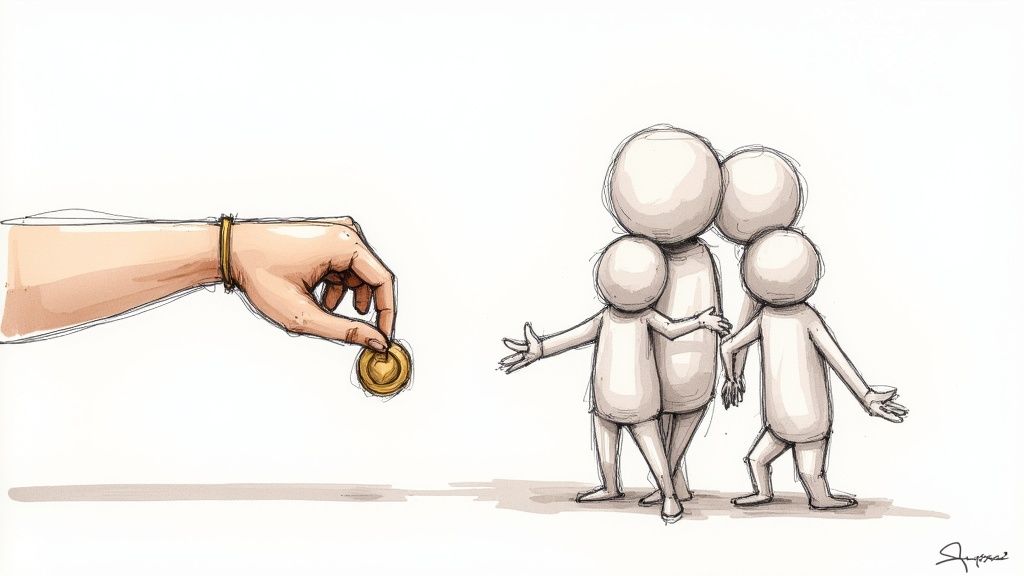
Let's be honest: real recognition goes far beyond a simple "thank you" at the year-end party. If we truly want to understand how to motivate work teams, we need to start viewing appreciation as a daily practice, not as an isolated event that happens once a year.
After working with hundreds of companies since 2019, one thing is abundantly clear to us: small, consistent, and above all personalized gestures have a much greater impact than sporadic grand rewards. When recognition is timely and well-targeted, it strengthens a sense of belonging and shows individuals that their unique effort is seen and valued by the organization.
Beyond the annual review
Waiting until the annual performance review to give feedback is one of the most common mistakes—and a surefire way to kill motivation. The key to effective recognition lies in immediacy and consistency.
Recognition is a powerful motivational tool and a fundamental component of emotional salary. A good leader must highlight achievements, celebrate team successes, and ensure a strong internal communication strategy.
When you implement a continuous, constructive feedback system, you don't just correct course in time—you celebrate wins right as they happen. This is what keeps team energy high and reinforces the positive behaviors you want to see more often.
Practical, low-budget ideas
You don't need a massive budget to start recognizing your team. In fact, sometimes the best ideas are the simplest ones. Here are a few we've seen work wonders that you can put into practice tomorrow:
Peer recognition: How about creating a Slack channel or a physical bulletin board where team members can publicly thank one another? Fostering a culture of horizontal appreciation is incredibly powerful.
Milestone celebrations: Dedicate the first five minutes of weekly meetings to highlight team successes, no matter how small they may seem. Celebrating these "small wins" builds a positive momentum that is contagious.
Growth opportunities: Did someone demonstrate a new skill? Assign them a project that allows them to hone it even further. This sends a clear signal that you are investing in their professional growth.
Wellness perks: Sometimes, the best recognition isn't a pat on the back, but a well-deserved break. Gifting moments of relaxation is a tangible way to say "thank you for your hard work." An excellent option is spa gift certificates, which offer a memorable experience of care and appreciation.
Build a positive and safe work environment

There is something that kills motivation faster than anything else: a toxic work environment. It doesn't matter how many bonuses or awards you offer; if people don't feel safe, respected, and valued in their daily routine, the team's energy simply fades out.
That is why building a positive environment is the cornerstone of any real strategy on how to motivate work teams.
And this goes far beyond having a pretty office. It's about cultivating psychological safety—a key concept that, simply put, means creating a space where everyone feels free to share ideas, challenge the status quo, and, above all, admit mistakes without fear of retaliation or embarrassment. A team that feels safe is a team that truly innovates.
The foundations: trust and purpose
For that safety to flourish, you need solid pillars. One of the most important is having clear, shared goals. When everyone understands where the ship is headed and how their work drives that momentum, it creates a collective sense of purpose that unites and focuses the team.
Psychological safety is not a luxury; it is an indispensable prerequisite for genuine collaboration. A team that trusts is a team that dares to speak up, make mistakes, and ultimately succeed together.
Another fundamental pillar is conflict management. It's naive to think there won't be disagreements. The key is in how we address them: constructively and transparently, turning them into opportunities for growth rather than letting them turn into simmering undercurrents of tension. Encouraging open communication and empathy is crucial. If you'd like to dive deeper into protecting your team, we recommend our guide on preventing psychosocial risks.
The absence of such an environment has direct, measurable consequences. In fact, it is projected that 78% of workers in Mexico will actively seek a new job in 2025. This figure is no coincidence; it is a clear reflection of dissatisfaction and the urgent need for healthier work environments.
Team-building activities—both formal events and those seemingly trivial coffee breaks—are invaluable tools. These are the moments that strengthen bonds, improve communication, and remind us that, before being coworkers, we are human beings working together.
Invest in their professional growth and give them autonomy
High-caliber talent is no longer satisfied with just a good paycheck. What they really want is a clear path to grow—a road where they can see their future. That's why, if you truly want to understand how to motivate work teams, investing in their professional development isn't a perk; it's one of the most powerful tools at your disposal.
When employees feel that the company is investing in them, their commitment skyrockets. But this isn't about sending them to random, generic courses without rhyme or reason. The key is building career paths that make sense, connecting each person's aspirations with the goals of the business.
The power of trust and letting go of control
One of the most direct ways to foster that growth is by assigning challenging projects. Pushing your team out of their comfort zone by giving them responsibilities that stretch their abilities is the clearest signal of trust you can send—and it fuels motivation from the inside out.
Alongside development, autonomy is the other side of the coin. Giving your people more control over how, when, and where they do their work isn't merely a perk; it is a powerful driver of engagement. When you delegate decision-making and trust their judgment, you give them a sense of ownership over their results that is priceless.
Empowering your team to take the lead on their projects doesn't just lighten your workload as a leader. It proves you trust their talent, strengthening their commitment in a way no bonus ever could.
Companies that have embraced flexible work policies or hybrid models have seen it firsthand: the positive impact on morale and retention is direct and undeniable. This is especially true for the newer generations entering the workforce.
In Mexico, for example, Generation Z is particularly sensitive to a lack of stimulation and growth. According to a recent study, this generation can see its workplace motivation drop by up to 18 percentage points after their first year. You can read the full analysis on youth motivation at work in Milenio. Fostering autonomy and continuous development is the only way to keep their energy and engagement afloat.
Well-being as a cornerstone of corporate motivation
There is a connection that cannot be ignored: an exhausted team is, by definition, a demotivated team. It's that straightforward. Overlooking this is one of the biggest roadblocks to any strategy aimed at understanding how to motivate work teams. Well-being is no longer a luxury or a niche perk; today, it is the foundation upon which energy, creativity, and resilience are built.
Since 2019, we have collaborated with hundreds of companies in Mexico, and experience has shown us time and again that investing in employee well-being is one of the most strategic decisions a leader can make.
A team that feels cared for is a team that cares for the company. Well-being initiatives send a clear message: "Your effort matters, but your health matters more."
This tangible act of care generates a return on investment that extends well beyond the numbers, directly impacting day-to-day loyalty and commitment.
A measurable impact
When companies consistently integrate wellness programs, the results speak for themselves. Based on our bi-annual corporate client satisfaction surveys, we have seen clear, tangible benefits:
Less stress: An impressive 83% of employees report a noticeable reduction in stress levels after participating in our programs.
Feeling valued: 95% feel that their company genuinely cares about their well-being, strengthening their emotional bond with the organization.
Better environment: 75% experience an improved overall mood in the office, inspiring a more positive and collaborative work atmosphere.
The best part is that implementing these benefits is simpler than it seems. Whether through a shiatsu chair massage in a common area or a relaxing break right at their desk so work flow isn't interrupted, these solutions adapt to any office dynamic without disrupting operations.
If you'd like to learn how to roll this out at your company, you can explore how these corporate wellness programs work and see how other organizations are already making it happen.
Answering your questions about team motivation
As corporate wellness specialists, we know that the journey to understanding how to motivate work teams is filled with questions. We've compiled the most common inquiries from HR managers and leaders to give you direct, practical answers you can start applying today.
How do I motivate a team that seems completely apathetic?
Apathy is almost always a symptom, not the root problem. The first step is always a one-on-one conversation. You need to understand what's behind it: it could be burnout, a clear lack of recognition, or goals that simply fail to resonate with anyone.
Once you identify the cause, it's time to roll out visible changes. One tactic that works wonders is creating "small wins" to rebuild team trust and momentum. For instance, introducing a wellness program sends a powerful signal that the company truly cares, breaking up monotony and noticeably improving the atmosphere.
Which is more important: intrinsic or extrinsic motivation?
Let's be clear. Extrinsic motivation (bonuses, promotions, awards) works, and it works well—but only in the short term. It's a temporary burst of energy. However, it is intrinsic motivation (feeling a genuine purpose, satisfaction from a job well done) that creates sustainable commitment—the kind that lasts for years.
You need a balance, of course. But it is intrinsic motivation that builds long-term loyalty. External rewards should complement, not form the entire foundation of your strategy.
To nurture that inner drive, focus on granting real autonomy, providing clear growth paths, and connecting day-to-day tasks with the company's broader mission. That is what helps people feel like they are part of something bigger.
How often should I run motivational initiatives?
Motivation isn't an annual event. It's an ongoing practice—a muscle that needs to be exercised. Recognition should be part of daily life, even through small, genuine gestures. Feedback sessions, for example, can be bi-weekly or monthly to keep everyone aligned and, above all, heard.
Wellness programs, like chair massages, deliver a much greater impact when they are recurring. A monthly or bi-weekly session builds a habit of self-care and demonstrates continuous commitment, unlike a one-off event that feels good for a day and is forgotten the next. The key is embedding motivation into the culture, not treating it like an emergency fix.
How do I measure if my motivation strategies are working?
Sure, productivity numbers matter, but they don't tell the whole story. Look at other key indicators that reveal much more: voluntary turnover rate, absenteeism, and results from work climate surveys are your best barometers.
You can also measure something very straightforward: participation in the wellness or development programs you offer. If people get involved, share ideas more freely, and collaborate without being asked, you're on the right track. And don't underestimate qualitative data; direct feedback from one-on-one meetings is pure gold.
One of the best ways to gauge impact is by observing a drop in overall burnout. If you'd like to explore further, here are some practical tips on how to effectively reduce workplace stress.
At Zen to Go, we are committed to helping you build a work environment where motivation and well-being truly thrive. Discover how our corporate wellness solutions can transform your team's energy.