How to motivate employees: the ultimate guide for leaders in Mexico
Understanding how to motivate employees in practice means accepting a simple reality: motivation is not a luxury, it is the engine that drives productivity, innovation, and stability for any company in Mexico. An engaged, high-energy team doesn’t happen by chance; it is the reflection of an environment that values their well-being, offers a clear growth path, and genuinely recognizes their effort.
As partners to hundreds of Mexican companies since 2019, we have seen firsthand that investing in team motivation is not an expense—it is the smartest strategy for building a solid culture and growing sustainably.
Why Motivation Is the Major Challenge for Companies in Mexico
Addressing demotivation has become one of the greatest challenges for leaders in Mexico. Far from being a "soft" HR topic, it is a reality that directly impacts productivity, triggers employee turnover, and pollutes the work environment.
Why do so many teams feel disconnected? The answer is more complex than a simple "they aren't trying hard enough." Factors such as compensation perceived as unfair, the lack of a clear career path, and leadership that doesn't know how to connect are just the tip of the iceberg. The Mexican labor market is changing at an impressive pace, with younger generations valuing purpose, flexibility, and well-being as much as—or more than—salary. Ignoring this is one of the most costly mistakes an organization can make today.
The Current Landscape of Workplace Motivation
Job dissatisfaction is a real and widespread problem in the country. According to recent studies, 44% of employees are not satisfied with their jobs, while barely 34% feel satisfied.
The reasons are clear: 51.5% are actively looking for another job due to low wages, and 46.6% are doing so because of a lack of growth opportunities. This translates into a vicious cycle of high turnover rates, lower productivity, and skyrocketing recruitment and training costs that many companies struggle to break.
This disconnect carries a tangible cost. A demotivated team is not only less efficient, but also more prone to making mistakes and creating a negative work climate that spreads like a virus. And demotivation is not an isolated perception. It is a systemic issue reflected in constant talent loss—an expensive metric for any business.
Main Causes of Workplace Demotivation
To tackle the problem at its root, it is essential to understand what factors are behind this disconnect. Based on our experience with diverse teams across Mexico, we have identified very clear patterns.
Cause of Demotivation | Direct Impact on the Employee | Consequence for the Company |
|---|---|---|
Uncompetitive salary | Financial stress, feelings of being undervalued. | Talent loss to competitors, difficulty attracting key profiles. |
Lack of growth | Career stagnation, boredom, feeling of having no future. | Loss of internal knowledge, low innovation, passive teams. |
Poor leadership | Lack of clear direction, micromanagement, zero recognition. | Toxic work climate, low engagement, high turnover in specific teams. |
Excessive workload | Chronic burnout, health issues, work-life imbalance. | Increased absenteeism, costly errors, low work quality. |
Lack of flexibility | Rigid schedules and workplace policies, perception of mistrust. | Difficulty retaining young talent, reduced organizational agility. |
These elements, often overlooked in daily operations, quietly erode team morale until reaching a breaking point.
Beyond the Numbers: The Human Experience
Behind every statistic, there is a person. A team member who arrives at the office feeling that their work lacks purpose, that their efforts are invisible, or that there is no clear path for their future will inevitably lose their drive.
This is where the concept of occupational health takes on critical importance. It is not just about compliance with regulations; it is about actively building an environment that promotes people's overall well-being. If you want to dive deeper, we invite you to read our article on what occupational health is and its real impact on the company.
In our experience working with hundreds of companies in Mexico since 2019, we have seen that the most successful initiatives are those that actively listen to teams and respond with concrete actions.
Understanding that motivation is a strategic necessity—and not just an extra perk—is the first big step. Only then can companies build a strong culture, retain top talent, and grow sustainably in a market that does not forgive indifference.
Motivational Strategies That Go Beyond Salary
Fair compensation is the baseline, the starting point. But genuine motivation—the kind that sparks engagement and creativity—is built on elements that money cannot buy. The strongest teams are those that feel truly valued, heard, and connected to a purpose that goes beyond day-to-day tasks.
Going beyond the paycheck is not an expense; it is a direct investment in your most valuable asset: your people. The challenge is weaving a culture where motivation arises naturally. And that starts by understanding what truly moves your team members and taking action accordingly.
Building a Culture of Genuine Recognition
Many leaders associate recognition solely with major milestones. The reality, however, is that small, consistent gestures are what truly build an environment of appreciation. The key is to keep it specific, timely, and above all, authentic.
Instead of a generic "good job," try something like: "Thank you for staying late to polish the presentation; your attention to detail was key to closing the deal." This kind of feedback validates specific effort and shows the individual that their contribution is visible and valued.
According to Deloitte, 94% of executives and 88% of employees believe that a positive workplace culture is crucial to success. Recognition is the foundation of that culture.
Implementing a visible system—whether it is a Slack channel to celebrate wins, shout-outs during team meetings, or an "employee of the month" program—formalizes the practice. This ensures no one goes unnoticed and turns recognition into a cultural habit.
Fostering Flexibility and Autonomy
Flexibility is no longer a "perk"; it has become a baseline expectation. High-performing teams thrive when they feel the company trusts them to manage their time and responsibilities. And no, it is not just about allowing remote work.
Autonomy means giving your team members the freedom to make decisions within their role and the space to propose creative solutions to problems. An employee who feels in control of their work is an infinitely more engaged employee.
Here are a few practical ideas to get started:
Flexible hours: Allow people to adjust their start and finish times to accommodate personal needs.
Results-oriented focus: Measure success by goal achievement, not by the hours someone spends in the office.
Project ownership: Assign a project to a team member and empower them to make key decisions.
This shift in mindset demonstrates deep respect for work-life balance and nurtures a sense of ownership that monetary bonuses rarely achieve.
Connecting Daily Work to a Clear Purpose
Do your employees understand how their Excel report or that vendor call contributes to the company's mission? When tasks feel disconnected from the big picture, routine and demotivation take over. As a leader, your responsibility is to draw that connection line, over and over again.
A very effective tactic is to always communicate the "why" behind every goal. Don't just say, "we need to increase sales by 15%." Explain how that growth will allow investment in better technology for everyone or team expansion, creating new opportunities.
This turns everyday tasks into part of something bigger and more exciting. We’ve seen this with our clients: workplace wellness programs are an incredible tool to reinforce this purpose because they prove through action that the company invests in its people's health and happiness.
In addition to our recurring in-office programs, gift certificates for in-home massages are an excellent complement. They offer personalized recognition with high perceived value that employees can enjoy in their own space, reinforcing that message of care and appreciation in a very tangible way.
The Leader's Role as a Catalyst for Motivation
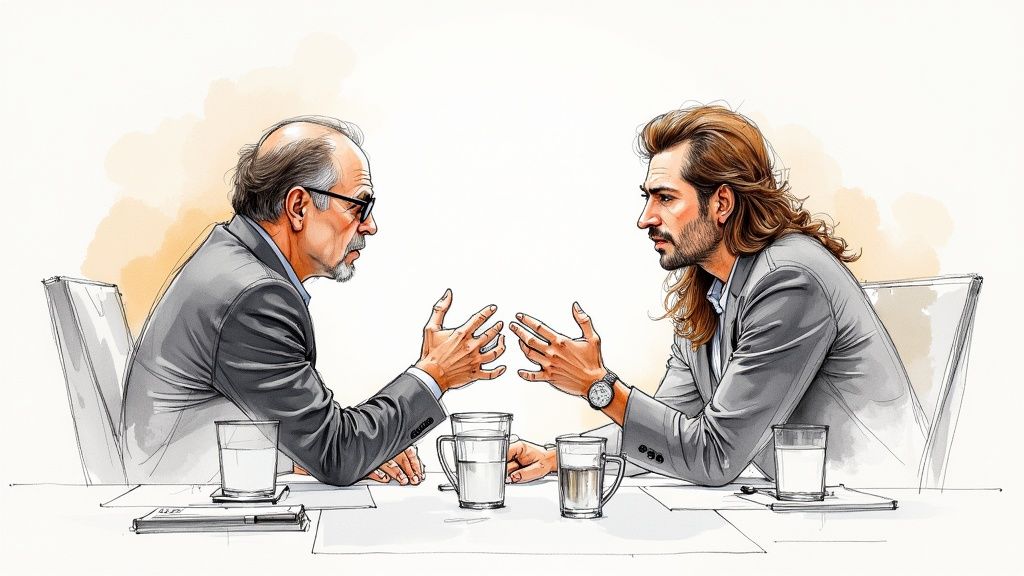
A motivated team is almost always the reflection of an inspiring leader. Forget complex management theories; real motivation is built day to day. It is cultivated through concrete actions that demonstrate empathy, trust, and clear direction.
Motivation is not dictated from a pedestal; it is spread by example. A leader who knows how to motivate is, in essence, a catalyst. Their role is not just to assign tasks, but to unlock each person's potential, turning a group of individuals into a cohesive team with a shared purpose. That requires more listening than talking, and more coaching than giving orders.
Communication as the Cornerstone of Trust
The foundation of all this is open and honest communication. When a leader communicates transparently, they build an environment of psychological safety—a place where employees are not afraid to voice ideas, admit mistakes, or ask for help.
And no, we're not just talking about weekly meetings. It’s about creating consistent, accessible communication channels where every team member feels their voice is truly heard.
A key factor is feedback. Feedback cannot be a dreaded annual event; it must be an ongoing, constructive conversation.
Be specific and timely: Don't wait months to bring something up. Address areas for improvement and successes in the moment, using clear examples.
Focus on behavior, not the person: Instead of saying "you are disorganized," try "I noticed project X was delayed due to a lack of follow-up on deadlines."
Offer solutions and support: The goal is growth. Wrap up the conversation with an action plan and offer your support to achieve it.
Becoming a Coach, Not a Boss
The outdated model of the "boss" who only gives orders is obsolete. Leaders who truly motivate act as coaches: they identify their people's strengths, help them overcome weaknesses, and push them to reach their full potential.
One of the clearest signs of this approach is delegating with trust. When a leader assigns responsibility and gives the necessary autonomy to execute, they send a powerful message: "I trust your judgment and your capabilities."
Leaders who invest time in developing their teams reap the greatest rewards. A team member who feels supported and sees a clear path for growth is someone who will stay and give their best.
Managing Conflict and Understanding Younger Generations
Conflict is inevitable in any team. The big difference lies in how it is handled. A catalyst leader does not ignore conflict; they face it head-on, seeking fair solutions that strengthen relationships rather than weaken them.
This approach is especially vital with younger generations, who value more approachable and authentic leadership. Understanding these dynamics is crucial. What motivated a Baby Boomer won't necessarily inspire a member of Generation Z, who prioritizes purpose, flexibility, and mental health.
Ultimately, being a leader who catalyzes motivation requires a genuine commitment to people. It demands consistency, empathy, and vision, but the result is a team that not only meets goals, but does so with passion and a deep sense of belonging.
Corporate Wellness as an Engine for Productivity

Talking about how to motivate employees without mentioning wellness is like trying to build a structure without a foundation. It’s simple: an employee who lives under constant stress or carries the weight of chronic exhaustion will struggle to find the energy to stay engaged and innovate.
Motivation does not appear in a vacuum; it needs a fertile environment to thrive. That is why corporate wellness programs have evolved from an "extra perk" into a strategic investment, with a measurable return on productivity and retention. It is a tangible demonstration that the company genuinely cares about its people.
The Direct Impact of Wellness on Performance
When an employee feels cared for, their perception of the company changes completely. It is no longer just a place where they log hours, but an environment that actively supports their overall health. This strengthens loyalty and builds an emotional connection that goes far beyond a paycheck.
Initiatives like corporate chair massages, for example, have an immediate and visible effect. A 15-minute break might seem small, but its impact on reducing stress and recharging energy is huge. At Zen to Go, we see it every day in our clients' offices.
Based on our bi-annual satisfaction surveys, 83% of employees report a significant reduction in stress after receiving our massages. This isn't a minor detail; it’s a clear indicator of how a concrete wellness action can transform the mood of an entire team.
These active breaks do not just relieve physical tension built up from hours in front of a screen; they also provide a mental reset that lets team members return to their work with greater clarity and focus. The effect on work quality is direct.
Data Proving the Value of Investing in Wellness
The numbers speak for themselves. Wellness programs are not an expense; they are an engine that drives key business metrics. The evidence we have gathered since 2019 working with mid-sized and large companies in Mexico is conclusive.
We have seen firsthand how a tangible, consistent program shifts a team’s perception. Here is real data from our bi-annual surveys:
Impact of Our Corporate Massages on Employees
Wellness Metric | Measured Result (%) |
|---|---|
Perception that the company values their well-being | 95% |
Would recommend the program to other companies | 97% |
Improvement in overall mood | 75% |
When 95% of your team members feel the company actively invests in their well-being, the impact on culture is profound. This feeling translates into greater engagement, lower turnover, and a much more positive, collaborative work environment.
Practical Ideas to Integrate Wellness into Your Company
You can start with simple strategies to foster a healthier environment:
Create spaces to disconnect: A small lounge area with comfortable seating, plants, or even a tech-free zone can make a huge difference.
Encourage active breaks: Encourage your team to take short breaks every hour to stretch, walk around, or simply look away from their screens.
Provide healthy snacks: Swapping out ultra-processed snacks for fresh fruit, nuts, or granola bars is a simple gesture that promotes better habits.
Introduce chair massages: One of the most popular and efficient formats is the Shiatsu chair massage. It requires minimal space and employees remain fully clothed, making it ideal for events or wellness days. To learn more about its advantages, you can read our article on the benefits of Shiatsu chair massage.
Remember that a massive budget isn't necessary to get started. The most important thing is consistency and an authentic message: your team is your most valuable asset, and taking care of them is the best business strategy you can implement.
Creating a Motivation Plan That Speaks Your Culture's Language
There are no one-size-fits-all solutions here. Every company culture is a living ecosystem with its own dynamics and values. Knowing how to motivate employees effectively requires a tailored plan, not simply copy-pasting what worked for the company next door.
A successful motivation plan is one that feels authentic—one your team recognizes as their own. It should reflect who you are as an organization and connect directly with what your people care about. That personal touch turns an HR initiative into real cultural transformation.
Step One: Assess Your Team's Real Needs
Before launching any program, you need to listen first. The best strategies aren't built on assumptions, but on data and honest conversations. To understand what motivates (and demotivates) your people, you need to open secure channels where they can share unfiltered feedback.
Anonymous surveys are a powerful tool for this. They allow team members to be candid about sensitive topics—leadership, compensation, work-life balance—without fear of repercussions.
However, numbers only tell part of the story. Combine those surveys with one-on-one check-ins and focus groups. These conversations provide the context, stories, and emotions behind the data. That’s where you uncover the "why."
In our experience, companies that take the time to run this diagnosis see a much higher success rate. Active listening isn't wasted time; it’s the best investment you can make.
Set Clear and, Above All, Measurable Goals
Once you know what challenges and matters most to your team, it's time to translate those insights into concrete goals. A plan without objectives is just a wishlist. You need to know where you want to go and how you will measure your success.
These key performance indicators (KPIs) should be directly tied to the issues you identified.
Reduce turnover rates: If the assessment revealed frustration, a goal might be to lower voluntary turnover by 15% over the next six months.
Increase satisfaction scores: Run a pulse survey to measure your eNPS (Employee Net Promoter Score) and aim to raise it by 10 points.
Boost participation in wellness programs: If stress is a recurring theme, you could set a goal for 70% of the team to participate in at least one wellness activity per quarter.
Tracking these KPIs gives you the tools to demonstrate ROI on your initiatives and is a key step toward improving the work environment sustainably, a topic we explore in depth on our blog.
A Comprehensive Approach Combining Different Strategies
Motivation doesn't come from just one place, so your plan shouldn't either. Instead of putting all your eggs in one basket, the smart move is to build a cohesive program that blends different types of incentives and support.
A comprehensive program might include:
Recognition: Implement a peer-to-peer and leadership recognition system that is visible and frequent.
Development: Create clear career pathways and offer training opportunities people are genuinely excited to pursue.
Wellness: Incorporate active breaks, mental health programs, and tangible perks like Zen to Go's corporate massages.
This is precisely where Zen to Go's gift certificates for in-home massages shine as a complement. They offer a personal, flexible reward with high perceived value, allowing each employee to enjoy a wellness treat whenever and however they prefer.
Communicate, Measure, and Adapt as You Go
Launching your plan is a critical moment. You must communicate it with energy and clarity, explaining the "why" behind each initiative and how it benefits everyone. Transparency builds trust and boosts participation.
The work doesn't stop there, though. Motivation is an evolving process. Measure your KPIs regularly, ask for feedback continuously, and don't hesitate to adjust your approach if something isn't working as intended. A solid motivation plan evolves alongside the company and its people.
Frequently Asked Questions About Motivating a Team (and Straightforward Answers)
As partners to HR teams and leaders in corporate wellness, we know the path to keeping a team motivated is filled with practical questions. Years of hands-on experience have allowed us to compile the most common inquiries our clients bring to the table.
Here are straightforward, actionable answers—just like a casual conversation over coffee.
How often should we organize motivational activities?
There is no magic formula, but there is one principle that never fails: consistency beats intensity. Forget the massive annual event that everyone forgets the following week. Real motivation is built through daily habits, not one-off fireworks.
Think of it as the company's pulse. You want a steady rhythm, not dramatic peaks and valleys. To achieve this, we recommend a balanced mix:
Weekly actions: Small gestures that add up significantly. Public recognition during a Monday meeting or a dedicated Slack channel to celebrate wins.
Monthly actions: Activities that shake up the routine. A recurring chair massage program can easily become the most anticipated wellness ritual of the month.
Quarterly actions: Thoughtfully planned team-building events or professional development workshops that demonstrate real investment in team growth.
How do I motivate a remote or hybrid team?
Motivating a distributed team presents unique challenges. The primary obstacle is isolation. Your focus should be on building a strong sense of community and, above all, equity—ensuring no one feels left out because they aren't working on-site.
Back-to-back video calls are exhausting, so get creative. Set up agenda-free "virtual coffee breaks," create chat channels to celebrate achievements, and ensure recognition is equally visible to everyone.
One strategy we've seen work wonders is delivering wellness experiences right to their doorstep. Our in-home massage gift certificates are a perfect solution. They allow remote employees to enjoy the exact same perk as office-based staff, helping them feel equally valued.
How do I justify investing in wellness to executive leadership?
This is the ultimate question. The key is speaking leadership's language: data, metrics, and return on investment (ROI). Stop presenting wellness as an "expense" and frame it as a strategic investment in productivity and talent retention.
Rely on hard data. For example: "Investing in a corporate massage program like Zen to Go's has been shown to reduce stress by 83% and leads 95% of employees to feel the company values their well-being. This directly translates into lower absenteeism and a drop in turnover rates, which currently cost us X amount annually."
Calculate how much it costs the organization to lose an employee (recruiting, onboarding, the learning curve) and compare that to the program cost. The math will almost always be on your side.
What should I do if an employee is chronically demotivated?
First, take a breath. Chronic demotivation is rarely just "laziness." It almost always points to something deeper: personal struggles, complete disengagement from their role, unresolved conflict, or the frustrating sense of being stuck.
The first step is holding an honest, empathetic one-on-one conversation. Your primary role here is to listen rather than talk. Try to identify the root cause, and if the solution lies within the company's control, build an action plan together. Sometimes, a simple shift in responsibilities or a new challenging project can reignite their spark.
If the issue persists despite these efforts, it is important to clearly outline performance expectations—approaching it with firm support and clear boundaries.
Transforming company culture and keeping your team inspired is a marathon, not a sprint. At Zen to Go, we are here to support you at every stage, providing wellness solutions that make a real and, above all, measurable difference.