Zen to Go Logo
Zen to Go Logo
Zen to Go Logo
Zen to Go Logo

Mexico is doing well in wellness. Is your company, too?
The Well-Being Index Paradox in Mexico

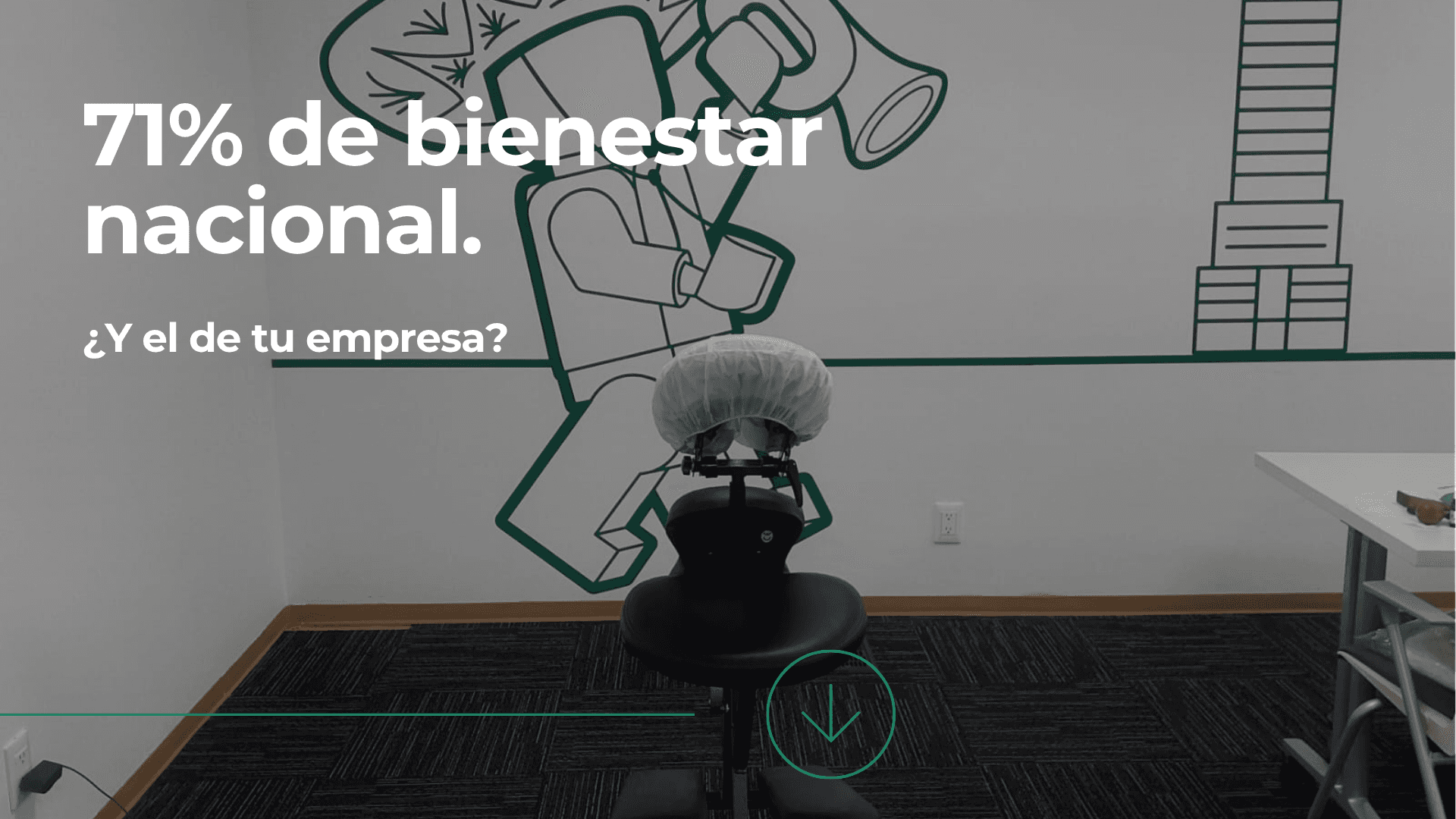
Mexico achieved a 71% workplace well-being index, above the global average, according to ManpowerGroup. That same week, another study found that only 23% of Mexican companies have accessible mental health programs. This article explains why a strong national index might be creating a false sense of security within individual organizations, following the very same logic behind the average salary fallacy.

Mexico achieved a 71% workplace well-being index, above the global average, according to ManpowerGroup. That same week, another study found that only 23% of Mexican companies have accessible mental health programs. This article explains why a strong national index might be creating a false sense of security within individual organizations, following the very same logic behind the average salary fallacy.

Mexico achieved a 71% workplace well-being index, above the global average, according to ManpowerGroup. That same week, another study found that only 23% of Mexican companies have accessible mental health programs. This article explains why a strong national index might be creating a false sense of security within individual organizations, following the very same logic behind the average salary fallacy.

Subscribe to our Newsletter for HR leaders

Workplace wellness strategies, success stories, and corporate promotions directly in your inbox.

Subscribe to our Newsletter for HR leaders

Workplace wellness strategies, success stories, and corporate promotions directly in your inbox.

The figure already circulating in executive committees

The ManpowerGroup 2026 Talent Barometer found that Mexico reached a well-being index of 71%, above the global average of 67%. It is a figure that feels good, is shared with pride, and easily becomes informal evidence that "we are doing well" behind closed doors.

A few months later, the Sesame 2026 National Human Resources Survey reported something else: 52% of employees are concerned about the deterioration of their emotional well-being at work. Only 23% of organizations have accessible mental health programs. And 59% consider that current benefits do not align with employees' different life stages.

The same mistake as the average salary

Any HR director has seen this trap before, just in a different context. Someone reviews the company's average salary and concludes that "everyone is well paid," without noticing that this average might be inflated by a handful of high salaries while the majority earns significantly less. The average hides exactly what matters most: the actual distribution.

The national well-being index works the same way. It is an aggregate of perception at the country level. It says nothing about whether your specific organization has real programs, processes, or infrastructure that sustain that well-being.

Two layers of information that are being mixed up

Here is the detail that makes both data points true at the same time, without contradicting each other. The ManpowerGroup index is built on how identified employees feel with their company's vision and values, and whether they believe their work has purpose. In Mexico, 85% say they feel identified with their organization's vision and 89% acknowledge that their work is meaningful. That is what feeds the 71%.

The Sesame study asks something completely different: whether an accessible mental health program concretely exists. It does not measure how people feel inside. It measures what is built, yes or no, into the structure.

A person can feel purpose in their work and, at the same time, work in an organization without a single structured mental health program. They are two distinct layers of the same reality: one measures meaning, the other measures infrastructure. Mixing them creates a false sense of security right where there should be more scrutiny.

What the national index does not tell you about your own company

A company can report "high well-being" in its internal communication or in a sustainability report without having anything real behind it. The risk surfaces later, when turnover increases, absenteeism accumulates, or an internal climate survey reveals the gap that the national index never showed.

The question you should be asking yourself

The important question is whether your organization, specifically, has anything real built behind that number, beyond how the country's well-being looks in the aggregate.

If tomorrow someone asked you for evidence of your well-being program, beyond a national index, what would you show them?

Book my in-home massage

Our customer service often exceeds expectations, providing an unmatched experience.

Certified therapists from the best SPAs in the city

No penalties if you cancel 24 hours before your service.

7 out of 10 local customers return and become frequent customers.

Book my in-home massage

Our customer service often exceeds expectations, providing an unmatched experience.

Certified therapists from the best SPAs in the city

No penalties if you cancel 24 hours before your service.

7 out of 10 local customers return and become frequent customers.

Book my in-home massage

Our customer service often exceeds expectations, providing an unmatched experience.

Certified therapists from the best SPAs in the city

No penalties if you cancel 24 hours before your service.

7 out of 10 local customers return and become frequent customers.

Book my in-home massage

Our customer service often exceeds expectations, providing an unmatched experience.

Certified therapists from the best SPAs in the city

No penalties if you cancel 24 hours before your service.

7 out of 10 local customers return and become frequent customers.

Zen to Go Logo

We bring wellness to your doorstep. We conveniently and securely connect you with the city's top therapists, so you can say goodbye to stress.

Contact us via your preferred channel:

Zen to Go News

Wellness tips and exclusive offers.

© 2019-2026 Zen to Go™. All rights reserved. Zen to Go is a registered trademark of Plataformas Zen México SA de CV.

Calle 38 Entre Av. 10 y 10 BIS, Local 12, Zazil-Ha, Playa del Carmen, Quintana Roo, CP 77720, México.