
We posted this a day late. And nothing changed.

Zen Weekly is typically published on Tuesdays. This week it came out on a Wednesday because the pre-publication editorial review wasn't completed on time. This article uses that real, low-stakes mistake as a starting point to talk about something most organizations don't do explicitly: distinguish between mistakes that actually cost something and those that simply happen.
Zen Weekly is typically published on Tuesdays. This week it came out on a Wednesday because the pre-publication editorial review wasn't completed on time. This article uses that real, low-stakes mistake as a starting point to talk about something most organizations don't do explicitly: distinguish between mistakes that actually cost something and those that simply happen.
Zen Weekly is typically published on Tuesdays. This week it came out on a Wednesday because the pre-publication editorial review wasn't completed on time. This article uses that real, low-stakes mistake as a starting point to talk about something most organizations don't do explicitly: distinguish between mistakes that actually cost something and those that simply happen.
Subscribe to our Newsletter for HR leaders
Workplace wellness strategies, success stories, and corporate promotions directly in your inbox.
Subscribe to our Newsletter for HR leaders
Workplace wellness strategies, success stories, and corporate promotions directly in your inbox.
Why it didn't come out on time this time
Every week before publishing, I, Claudia (COO of Zen to Go), check to see if there is any recent industry news that is more worth discussing than the article I already had prepared. I do that review myself; I deliberately don't automate it because I prefer to use sound judgment in the moment rather than letting an article get published on its own without anyone confirming that it is still the most relevant topic. This week I simply didn't have the time to do that review. And today, Wednesday, here it is. And in fact, I'm not publishing the planned article. I wanted to take advantage of this "mistake" to talk precisely about mistakes.
I could treat this as a process failure that needs to be corrected with tighter control: automate the publishing, remove the editorial review, keep it from happening again. But before reacting like that, there is a more useful question to ask: did this mistake have any real impact?
Reading Zen Weekly on a Tuesday or a Wednesday changes nothing for the recipient. It doesn't affect any business decisions, it doesn't compromise any data, and it doesn't alter any outcomes. It is, literally, a one-day difference for content that is read whenever someone has time anyway.
The hierarchy of mistakes
Most organizations treat any deviation from the process with the same level of urgency, without distinguishing between what actually affects critical outcomes and what simply doesn't matter that much. A calculation error in payroll is not the same as an email that goes out an hour late. A security breach is not the same as a meeting that gets pushed back 15 minutes. Treating them the same reveals a lack of judgment.
The cost of not distinguishing
When an organization responds with the same urgency to a critical mistake and to an irrelevant one, two things start to happen. First, the team burns out because they live with the same tension regarding everything, regardless of what is actually at stake. Second, real attention—the kind that should be focused on the mistakes that matter—gets diluted amid so much unnecessary alarm.
What I am doing about this
I'm not going to automate publishing just so it never happens again. I'm going to keep the editorial review exactly as it is, because the value of using sound judgment every week outweighs the risk of publishing a day late once in a while. That is the real adjustment: not eliminating judgment to avoid the mistake, but confirming that the judgment is still worth it compared to the actual cost of the mistake.
So today I ask you, does your organization distinguish between mistakes that carry a real cost and those that simply happen? Or is everything treated with the same urgency?
You may also like


Learn about our home delivery services
In-home massages and facials in several cities across Mexico

Customer favorite
Relaxing massage
Light to medium pressure
60, 90, and 120 min
· by therapist

Deep tissue massage
Strong, targeted pressure
60, 90, and 120 min
· by therapist

Sports massage
Firm and dynamic pressure
60, 90, and 120 min
· by therapist

Lymphatic drainage massage
Gentle and rhythmic pressure
90 and 120 min
· by therapist

Prenatal massage
Light, secure pressure
60 and 90 min
· by therapist
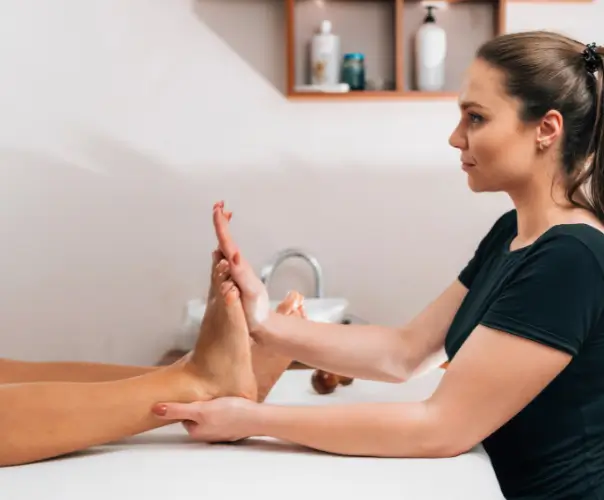
Reflexology
Gentle and rhythmic pressure
60 mins
· by therapist

Customer favorite
Couples Massage
Customized pressure for everyone
60, 90, and 120 min
· as a couple

Fiesta SPA
Massages and facials for your group
Request a quote
Learn about our home delivery services
In-home massages and facials in several cities across Mexico
Customer favorite
Relaxing massage
Light to medium pressure
60, 90, and 120 min
· by therapist
Deep tissue massage
Strong, targeted pressure
60, 90, and 120 min
· by therapist
Sports massage
Firm and dynamic pressure
60, 90, and 120 min
· by therapist
Lymphatic drainage massage
Gentle and rhythmic pressure
90 and 120 min
· by therapist
Prenatal massage
Light, secure pressure
60 and 90 min
· by therapist
Reflexology
Gentle and rhythmic pressure
60 mins
· by therapist
Customer favorite
Couples Massage
Customized pressure for everyone
60, 90, and 120 min
· as a couple
Fiesta SPA
Massages and facials for your group
Request a quote
Book my in-home massage
Our customer service often exceeds expectations, providing an unmatched experience.
Certified therapists from the best SPAs in the city
No penalties if you cancel 24 hours before your service.
7 out of 10 local customers return and become frequent customers.
Book my in-home massage
Our customer service often exceeds expectations, providing an unmatched experience.
Certified therapists from the best SPAs in the city
No penalties if you cancel 24 hours before your service.
7 out of 10 local customers return and become frequent customers.
Book my in-home massage
Our customer service often exceeds expectations, providing an unmatched experience.
Certified therapists from the best SPAs in the city
No penalties if you cancel 24 hours before your service.
7 out of 10 local customers return and become frequent customers.
Book my in-home massage
Our customer service often exceeds expectations, providing an unmatched experience.
Certified therapists from the best SPAs in the city
No penalties if you cancel 24 hours before your service.
7 out of 10 local customers return and become frequent customers.
We bring wellness to your doorstep. We conveniently and securely connect you with the city's top therapists, so you can say goodbye to stress.
Contact us via your preferred channel:
Zen to Go News
Wellness tips and exclusive offers.
Discover
Work with us
In-home massages
© 2019-2026 Zen to Go™. All rights reserved. Zen to Go is a registered trademark of Plataformas Zen México SA de CV.
Calle 38 Entre Av. 10 y 10 BIS, Local 12, Zazil-Ha, Playa del Carmen, Quintana Roo, CP 77720, México.