
Burnout is not a character flaw. It's a design problem.

62% of the frontline workforce reports losing engagement due to burnout, compared to 38% of the C-suite. It's not a matter of resilience; it's a matter of who controls their time. An analysis of why corporate wellness often measures symptoms instead of redistributing the resource that truly protects against exhaustion.
62% of the frontline workforce reports losing engagement due to burnout, compared to 38% of the C-suite. It's not a matter of resilience; it's a matter of who controls their time. An analysis of why corporate wellness often measures symptoms instead of redistributing the resource that truly protects against exhaustion.
62% of the frontline workforce reports losing engagement due to burnout, compared to 38% of the C-suite. It's not a matter of resilience; it's a matter of who controls their time. An analysis of why corporate wellness often measures symptoms instead of redistributing the resource that truly protects against exhaustion.
Subscribe to our Newsletter for HR leaders
Workplace wellness strategies, success stories, and corporate promotions directly in your inbox.
Subscribe to our Newsletter for HR leaders
Workplace wellness strategies, success stories, and corporate promotions directly in your inbox.
If your workplace climate survey shows that burnout "varies by individual," it is measuring it wrong.
DHR Global's 2026 Workplace Trends report found something almost no company wants to face head-on: 62% of associates and 61% of entry-level staff report that burnout reduced their engagement. In the C-suite, that figure is 38%.
"C-suite" refers to the highest-ranking executive positions in an organization, those with "Chief" in the title: CEO, COO, CFO, CHRO, CTO, etc. It is the senior leadership level that makes the company's strategic decisions.
In the context of this week's article, it is the group we are comparing against the operational frontline: they are the ones reporting less burnout (38%) compared to associates and entry-level staff (61-62%).
The easy explanation is that leadership "handles more." That they have more experience, more resilience, more tools to manage pressure.
It is convenient, and it is false.
What separates a director from an associate is not character. It is control. Control over their schedule, over how their energy is distributed, over who sees their effort and when. The C-suite is not more protected from stress. It is more protected from the design that creates stress.
Here is the part most of HR skips: this type of burnout is not detected in an annual climate survey. It is detected in the pattern of who skips their lunch break so they don't fall behind, who covers a coworker's shift without being asked, and who stops taking their earned days off for fear of being seen as the one who "can't hack it."
That pattern does not appear evenly across the organization. It appears concentrated at the levels that have less room to negotiate their own time. A director can reschedule a meeting. An associate, almost never. That asymmetry of power over the schedule is, in practice, the real risk indicator, long before absenteeism or turnover confirms it.
Companies' mistake is not ignoring burnout. It is treating it as an individual problem (resilience, mindfulness, personal boundaries) when it is actually an architectural problem: who has authority over their own time and who does not.
The business cost is direct. When exhaustion concentrates at the operational base, the organization loses the people who execute first, not the ones who make decisions. And that loss is rarely seen in the quarterly report; it is seen six months later, in execution quality and replacement costs.
Corporate wellness is almost always designed to measure symptoms, not to redistribute the resource that truly protects against burnout: control over one's own time.
Is your wellness strategy giving the frontline the same leeway to say no that your C-suite already has?
You may also like


Learn about our home delivery services
In-home massages and facials in several cities across Mexico

Customer favorite
Relaxing massage
Light to medium pressure
60, 90, and 120 min
· by therapist

Deep tissue massage
Strong, targeted pressure
60, 90, and 120 min
· by therapist

Sports massage
Firm and dynamic pressure
60, 90, and 120 min
· by therapist

Lymphatic drainage massage
Gentle and rhythmic pressure
90 and 120 min
· by therapist

Prenatal massage
Light, secure pressure
60 and 90 min
· by therapist
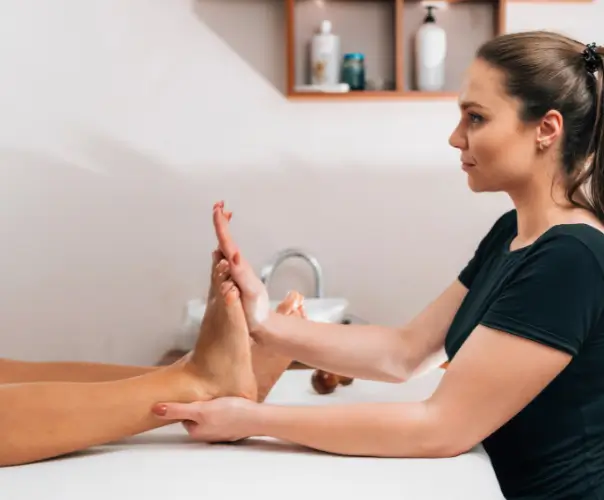
Reflexology
Gentle and rhythmic pressure
60 mins
· by therapist

Customer favorite
Couples Massage
Customized pressure for everyone
60, 90, and 120 min
· as a couple

Fiesta SPA
Massages and facials for your group
Request a quote
Learn about our home delivery services
In-home massages and facials in several cities across Mexico
Customer favorite
Relaxing massage
Light to medium pressure
60, 90, and 120 min
· by therapist
Deep tissue massage
Strong, targeted pressure
60, 90, and 120 min
· by therapist
Sports massage
Firm and dynamic pressure
60, 90, and 120 min
· by therapist
Lymphatic drainage massage
Gentle and rhythmic pressure
90 and 120 min
· by therapist
Prenatal massage
Light, secure pressure
60 and 90 min
· by therapist
Reflexology
Gentle and rhythmic pressure
60 mins
· by therapist
Customer favorite
Couples Massage
Customized pressure for everyone
60, 90, and 120 min
· as a couple
Fiesta SPA
Massages and facials for your group
Request a quote
Book my in-home massage
Our customer service often exceeds expectations, providing an unmatched experience.
Certified therapists from the best SPAs in the city
No penalties if you cancel 24 hours before your service.
7 out of 10 local customers return and become frequent customers.
Book my in-home massage
Our customer service often exceeds expectations, providing an unmatched experience.
Certified therapists from the best SPAs in the city
No penalties if you cancel 24 hours before your service.
7 out of 10 local customers return and become frequent customers.
Book my in-home massage
Our customer service often exceeds expectations, providing an unmatched experience.
Certified therapists from the best SPAs in the city
No penalties if you cancel 24 hours before your service.
7 out of 10 local customers return and become frequent customers.
Book my in-home massage
Our customer service often exceeds expectations, providing an unmatched experience.
Certified therapists from the best SPAs in the city
No penalties if you cancel 24 hours before your service.
7 out of 10 local customers return and become frequent customers.
We bring wellness to your doorstep. We conveniently and securely connect you with the city's top therapists, so you can say goodbye to stress.
Contact us via your preferred channel:
Zen to Go News
Wellness tips and exclusive offers.
Discover
Work with us
In-home massages
© 2019-2026 Zen to Go™. All rights reserved. Zen to Go is a registered trademark of Plataformas Zen México SA de CV.
Calle 38 Entre Av. 10 y 10 BIS, Local 12, Zazil-Ha, Playa del Carmen, Quintana Roo, CP 77720, México.