Positive and negative actions: Keys to building an exceptional work environment
As an HR professional, you know that the work environment isn't something abstract. It is built (or destroyed) with every email, every meeting, and every hallway conversation.
Positive and negative actions are precisely that: the set of behaviors, policies, and habits that, day in and day out, shape your company's culture in Mexico. We are not talking about theory, but about the sum of experiences that directly impact engagement, productivity, and, of course, talent retention.
Culture is built with small actions, not grand speeches
Understanding and managing these actions is key to tackling the challenges on your plate, from turnover that won't budge to compliance with regulations like NOM-035.
Think of these actions as the bricks of your corporate building. Positive actions build solid, dependable walls. Negative ones, on the other hand, create cracks that, over time, can compromise the entire structure.
The challenge for HR is not just to identify these behaviors, but to actively influence them. It is about embracing your role as the architect of a culture where interactions that add value far outweigh those that subtract from it. This ranges from publicly acknowledging an achievement to addressing an inappropriate comment, to implementing policies that truly foster balance and respect.
This concept map makes it very clear: culture is the core from which both positive and negative actions stem.
As you can see, each type of action generates a chain of opposing results. This reinforces a fundamental idea for any talent leader: cultural management must be intentional and consistent, not a one-off effort.
The domino effect in your day-to-day HR work
Every action, no matter how small it may seem, has a domino effect. Leadership that offers constructive feedback (a positive action) can spark confidence and autonomy across an entire team. Conversely, micromanagement or a lack of clarity (negative actions) generate stress and demotivation, directly feeding into psychosocial risk factors at work.
In our experience working with HR teams of various sizes in Mexico, we've seen that true cultural change happens when leaders and team members become aware of the impact of their daily behaviors. The key is making the invisible visible.
In this guide, we'll give you a practical framework to identify these behaviors, encourage those that build up, and mitigate those that tear down—solidifying your strategic role in the organization.
How actions impact your HR metrics
The effect of these actions isn't just anecdotal; it is directly reflected in the metrics you manage daily. To help you see it more clearly and present it to executive leadership, here is a comparative table summarizing the contrasting effects on your KPIs.
Key HR Metric | Impact of Positive Actions | Impact of Negative Actions |
|---|---|---|
Employee Turnover | Decreases. Engaged, valued talent doesn't look to leave. | Increases. A toxic environment is the primary driver of talent flight. |
Productivity | Increases. Teams with high trust and clarity are more efficient. | Decreases. Stress and demotivation reduce focus and quality. |
Absenteeism | Reduces. A healthy environment lowers leave taken due to stress or illness. | Increases. Burnout and anxiety lead to more excused and unexcused absences. |
eNPS (Employee Net Promoter Score) | Rises. Employees become brand ambassadors for the company. | Plummets. Detractors multiply, harming the employer brand. |
Workplace Climate (Surveys) | Improves consistently. An environment of support and growth is perceived. | Worsens. Surveys reflect distrust, fear, and poor communication. |
Compliance (e.g., NOM-035) | Facilitates compliance by creating a favorable psychosocial environment. | Complicates compliance and raises the risk of penalties and disputes. |
As you can see, fostering a culture of positive actions is not a "soft" initiative, but a business strategy with a measurable, direct impact on the organization's health.
The real cost of negative actions in your organization
As an HR leader, you know full well that negative and positive actions aren't just hallway gossip. They carry a real, tangible, and often silent cost that steadily undermines the company's profitability long before it shows up on a financial statement.
Presenting this cost clearly is your strongest argument for justifying new initiatives to leadership.
Think of negative actions as an invisible tax levied on productivity and engagement. A dismissive comment from a leader, an unclear vacation policy, or simply a lack of recognition doesn't just affect one person; its impact ripples across the entire team.
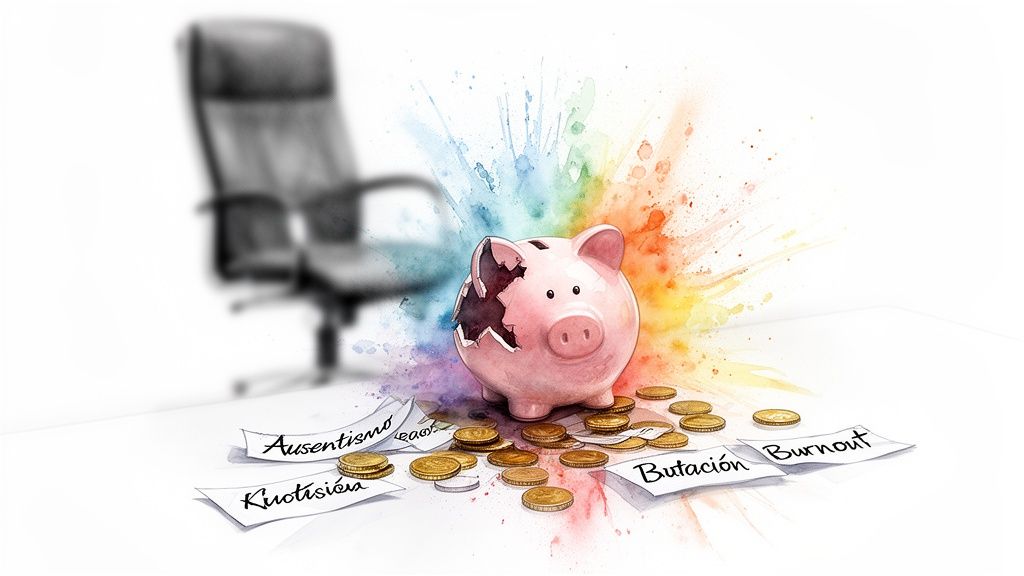
This domino effect quickly shows up in the metrics you care about most—the ones carrying a direct, measurable cost.
The measurable impact on your key metrics
The first visible symptom is usually an increase in absenteeism. A stressed or demotivated employee is more likely to get sick or simply lack the energy to come to work. But there is something even costlier: presenteeism. That employee who is physically in the office but mentally checked out, unable to focus, innovate, or collaborate.
As dissatisfaction grows, the next hit lands on voluntary turnover. Losing a strong team member doesn't just mean the cost of recruiting and training a replacement (which can reach up to 200% of the role's annual salary), but also the loss of institutional knowledge and the demoralization of the team left behind.
Negative actions are the primary fuel for burnout. A toxic environment doesn't just burn out your top talent; it forces you to spend valuable resources putting out fires instead of building the future.
From dissatisfaction to operational paralysis
Chronic stress and burnout, direct consequences of a negative work environment, don't stop at individual productivity. These phenomena stifle creativity and collaboration—two essential ingredients for a business to innovate and adapt.
To diagnose the issue before it becomes critical, you can rely on very practical tools:
Frequent pulse surveys: Instead of waiting for the annual survey, run short, recurring polls to take the pulse of workplace climate in near real-time.
Exit interview analysis: Look for patterns. If multiple people cite the same leader or policy as their reason for leaving, you have a very clear red flag.
Team-by-team productivity metrics: Cross-reference performance data with climate survey results. This will allow you to identify direct correlations between a poor environment and a drop in productivity.
Quantifying the cost of doing nothing is essential. When you use data to show how negative actions are hitting the bottom line, the conversation around workplace wellness shifts from a "nice-to-have" to a strategic necessity.
Practical examples of positive actions that actually work
Let's move away from theory and focus on what truly matters: practice. As an HR leader, you know full well that good intentions amount to nothing if they aren't translated into concrete, visible, and, above all, consistent actions.
The most effective positive actions are rarely the most expensive. They are the ones woven into the daily office routine that gradually reinforce the culture you want to build. Here are realistic, actionable ideas, whether your company is a startup or a major corporation.
Humane, approachable leadership
Leaders are the megaphone of your organizational culture. What they do (and don't do) each day is the most powerful positive or negative action teams experience.
Check-ins that go beyond work: Introduce very short, 15-minute weekly meetings where the first question isn't about project status, but a simple "how are you doing?". This small gesture completely shifts the dynamic. It shows you care about the person, not just the employee.
Positive, public feedback: Encourage your managers to recognize strong results in team meetings or internal communication channels. Timely recognition is one of the primary drivers of engagement. And doing it publicly multiplies its impact.
Transparency that builds trust: Whenever possible, explain the "why" behind key decisions. This is crucial for reducing uncertainty, putting an end to hallway rumors, and building a solid foundation of trust. It makes your people feel like valued crew members, not just rowers.
Recognition that builds community
Recognition doesn't always have to come from the top down. In fact, fostering a culture of peer appreciation is one of the most powerful and cost-effective tools for safeguarding the work environment.
A peer-to-peer recognition program is an incredible way to achieve this. You can use a simple platform or, even easier, a dedicated Slack or Teams channel where people can publicly thank a coworker for their help or for a job well done.
In our experience working with HR teams in Mexico, we've seen how these small daily interactions of gratitude strengthen bonds and build a much stronger sense of team than any annual event ever could.
Visible, tangible well-being
Actions that demonstrate genuine care for people's physical and mental well-being form the foundation of emotional salary. It's not just about complying with NOM-035; it's about sending a clear, resounding message: "you truly matter to us."
One of the most valued initiatives is wellness programs experienced right in the office. At Zen to Go, for example, we see every day how chair massages become the most anticipated moment of the week.
They send a powerful message: The company actively invests in lowering its people's stress. It's not talk; it's action.
They are practical and non-disruptive: They take place right in the office, in short sessions that fit seamlessly into the workday.
They deliver an immediate impact: A 15-minute break can completely transform a person's energy for the rest of the day.
These actions are the bedrock of a positive culture. They don't require massive budgets, but they do demand two things: consistency and a genuine commitment across the entire organization, starting, as always, with its leaders.
HR strategies for building a positive culture
Now that you know how to distinguish between positive and negative actions and understand the domino effect they create, it's time to put it into practice. As an HR leader, your role extends beyond management; you are the architect of a deliberate, sustained cultural shift.
This isn't about launching one-off initiatives. It's about designing a system that inherently champions what is good and dismantles what is toxic.
Here is a roadmap—an action plan to make well-being and respect the everyday norm rather than the exception.
1. Diagnose to understand reality, not just symptoms
The first step, always, is to listen. Before implementing any program, you need an honest, unfiltered snapshot of where you stand. A solid diagnosis helps you direct energy where it's truly needed.
Climate and pulse surveys: Combine the major annual survey (the big picture) with shorter, more frequent pulse surveys (the close-ups). This will give you a real-time view of team sentiment.
Focus groups: Host confidential sessions in a safe environment. They are a goldmine for understanding the "whys" behind survey numbers and charts.
One-on-one interviews: Talk with leaders and key contributors. This is where you uncover stories, personal challenges, and deeper insights that raw data won't tell you.
Doing this doesn't just provide valuable insight. It sends a powerful message: "what you experience here matters to us, and we are listening."
2. Design policies with heart, not just legal jargon
Once you have the lay of the land, the next step is mapping out the paths. You need to translate all those learnings into clear, human-centered policies that serve as the organization's community code of conduct.
A code of conduct isn't just a document for legal compliance; it's a statement of principles. It should be a living guide that reflects company values and tells everyone, in straightforward terms, how we expect to treat one another.
Some essential policies that should never be missing include:
Healthy communication guidelines: Establish clear guidance on how to give and receive feedback, how to navigate disagreement constructively, and what the unwritten rules of communication are in a hybrid environment.
Flexibility and digital disconnection policies: Encouraging true work-life balance is one of the most powerful and valued positive actions today.
Clear, safe reporting channels: Ensure confidential channels exist to report negative behavior, backed by a strict zero-retaliation guarantee. People will only speak up if they feel safe.
These policies form the backbone of your culture. They bring certainty, consistency, and psychological safety to daily interactions. A great starting point is exploring how to motivate your work teams through these very support systems.
3. Train leaders to become agents of change
You can have the most inspiring policies in the world, but if your leaders don't live and model them, they'll remain on paper. Managers and directors are the lens through which employees experience company culture. Their role is critical.
Training needs to move beyond technical aspects and focus on deeply human skills:
Empathetic leadership: Train them to genuinely listen, put themselves in their people's shoes, and manage with compassion, not just through demands.
Conflict resolution: Give them practical tools to mediate disagreements and turn them into productive discussions rather than letting them escalate.
Effective recognition: Teach them how to acknowledge strong work in a way that truly motivates—making it timely, specific, and genuine.
External pressures also come into play. For example, while the financial health of Mexican workers slightly improved in 2023, scoring 52.8 points, financial stress remains a key factor in overall well-being. You can review further details in the INEGI report. By training your leaders, you equip them to support their teams holistically, understanding that people don't leave their personal challenges at the office door.
Corporate wellness as a strategic positive action
Investing in your people's well-being isn't an expense. In fact, it is one of the most powerful and strategic positive actions you can implement in your organization.
Think of it this way: while negative actions fuel stress and burnout, a thoughtful wellness program targets those consequences at their roots. It sends a clear, tangible message that resonates far more than any speech: "we care about you as a person, not just as headcount."
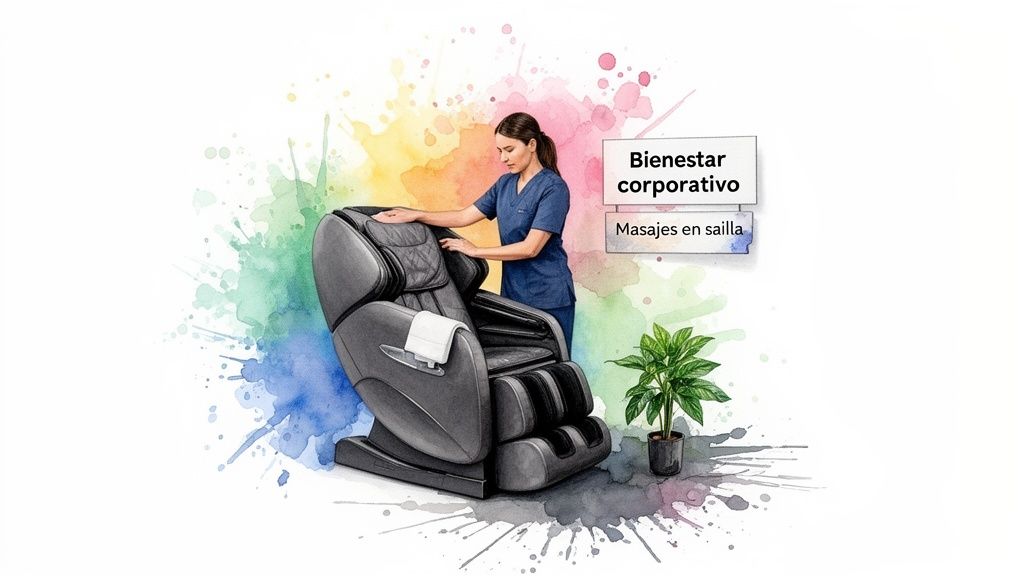
A culture of genuine care is built through actions, not good intentions. And to achieve it, you need a partner who understands the daily realities of Human Resources. It comes down to choosing initiatives that truly impact employees while remaining simple for your team to manage.
Operational ease is key to success
As an HR professional, your time is precious, and you're juggling multiple priorities at once. That's why any wellness initiative needs to be easy to implement—essentially plug-and-play. At Zen to Go, we designed our corporate massage programs with that exact need in mind.
We use an intuitive scheduling platform and assign you a dedicated account manager who handles all the logistics. Zero hassle for you.
Our flexibility is another core pillar. With options like At-Desk or Shiatsu Chair massages, we adapt to your office's space and pace. This versatility, paired with our coverage across key cities like Mexico City, Monterrey, and Guadalajara, allows us to deliver tailored solutions for companies with diverse locations and needs. To dive deeper, you can explore what workplace well-being is and how to implement it in our comprehensive guide.
Results that build a positive culture
The data doesn't lie. The impact of these actions is measurable. In our corporate programs, 99% of participants feel the company values their well-being. That perception is the seed of a positive culture and the direct antidote to the disengagement and apathy bred by negative environments.
The broader context also works in our favor. The overall improvement in peacefulness in Mexico, with a 0.9% drop in the economic impact of violence according to the Mexico Peace Index 2023, creates a more favorable backdrop for these initiatives. This stability enables wellness programs in cities like Mexico City and Monterrey to leverage a safer environment to boost productivity.
Looking long term, well-being can also connect with other areas. Consider how sustainability investments, such as implementing energy self-consumption, not only enhance corporate image and efficiency, but also reinforce a comprehensive message of care: toward people and toward the environment.
How to build a continuous improvement cycle in your company
Managing workplace climate isn't a project with a fixed start and end date. It is a living process—a continuous loop of listening, measuring, acting, and adjusting. The goal is simple: create an upward spiral where every insight turns into a tangible improvement, reinforcing a culture where positive actions are the standard, not the exception.
As an HR leader, your role here is pivotal. You are the one who turns raw survey metrics into meaningful conversations, and those conversations into new well-being policies. Never underestimate the power of each small action, because together, they build long-term trust and commitment.
Inspiring change means recognizing the complexity of your work and remembering that you are not alone. Your role as a cultural architect is vital to building more human, healthy, and productive workplaces.
Throughout this process, trust is the cornerstone supporting everything. A data point outside the workplace, yet highly relevant: consumer protection actions in Mexico totaled 26.4 million between 2014 and 2023. This reminds us of the critical importance of transparency and compliance. You can explore more of these statistics in the CONDUSEF yearbook.
That's why choosing partners like Zen to Go, who thoroughly vet every therapist, delivers more than just a service. It reinforces a culture of quality and safety, showing your team through concrete actions—not just words—your genuine commitment to their well-being.
So, here is a question to consider: what positive action, however small, can you put into practice this week? Change always begins with a single step.
With that in mind, let's address common questions
To wrap up, let's tackle the questions you're likely asking yourself as an HR professional when putting all of this into practice day to day. These are the doubts that always surface when moving from theory to execution.
How do I know if this is actually working?
The key is to avoid tying yourself to a single metric. Blend quantitative data with qualitative insights. On one hand, you have your hard numbers: turnover rate, absenteeism levels, and climate survey scores. Those are your core baseline indicators.
However, the full story comes from the people themselves. Complement those figures with what you hear in exit interviews, what comes up in focus groups, or even in casual hallway chats. Combining hard data with human perceptions gives you an authentic picture of the impact positive and negative actions are having on your team.
What should I do if the issue stems from a leader?
This is the most delicate scenario and, unfortunately, one of the most common. It requires timely, strategic action. First, document everything: note specific behaviors and their objective impact on the team. Focus strictly on facts, not personal opinions.
Next, schedule a private conversation with that leader. Present the facts without passing value judgments, and set crystal-clear expectations around what needs to change. Providing coaching or leadership training is essential; often, the behavior isn't ill-intended, but simply stems from a lack of tools.
That said, if the behavior persists after these steps, it's time to escalate. Protecting the team and company culture must always take priority.
This sounds great, but my budget is limited. What can I do?
This is where creativity beats budget constraints. There are plenty of high-impact, low-cost positive actions you can roll out starting tomorrow. For instance, launch a peer-to-peer recognition program (a simple dedicated Slack channel works wonders).
Encourage more flexible work hours or introduce meeting-free blocks of time so people can experience deep, focused work. Even something as straightforward as encouraging leaders to give consistent, public praise holds immense power. The key isn't the financial investment—it's consistency and genuine commitment.
Building a culture where the positive outweighs the negative is a marathon, not a sprint. At Zen to Go, we understand your unique challenges, and we're here to be the strategic partner that helps you create tangible, lasting workplace well-being.
Discover how our wellness programs can strengthen your organizational culture.