10 Wellness Activities for Multigenerational Teams That Actually Work
As a Human Resources professional in Mexico, one of your biggest challenges is designing initiatives that resonate equally with a retiring Baby Boomer, a Gen X at the peak of their career, a Millennial seeking purpose, and a Gen Z that values flexibility. Corporate wellness is no exception. A generic program rarely works; what motivates one generation may appear irrelevant or even physically inadequate for another.
This generational gap directly impacts key HR metrics such as engagement, absenteeism, and turnover. Ignoring it means investing budget in programs with low returns that fail to connect with the diverse needs of your team. To ensure a wellness program connects with all generations, it's crucial to consider the needs of each age group, such as including specific strength exercises for the older population alongside high-intensity activities for younger individuals. The key lies in adaptability and personalization.
This practical guide is designed for you, the talent leader looking to go beyond standard benefits and build a truly inclusive wellness program. Below, we share 10 wellness activities for multigenerational teams, tested and grounded in the reality of Mexican companies. Each proposal includes clear objectives, age adaptations, and practical examples so you can reduce turnover, combat burnout, and strengthen your organizational culture, regardless of your team's composition.
1. Intergenerational Desk Massages
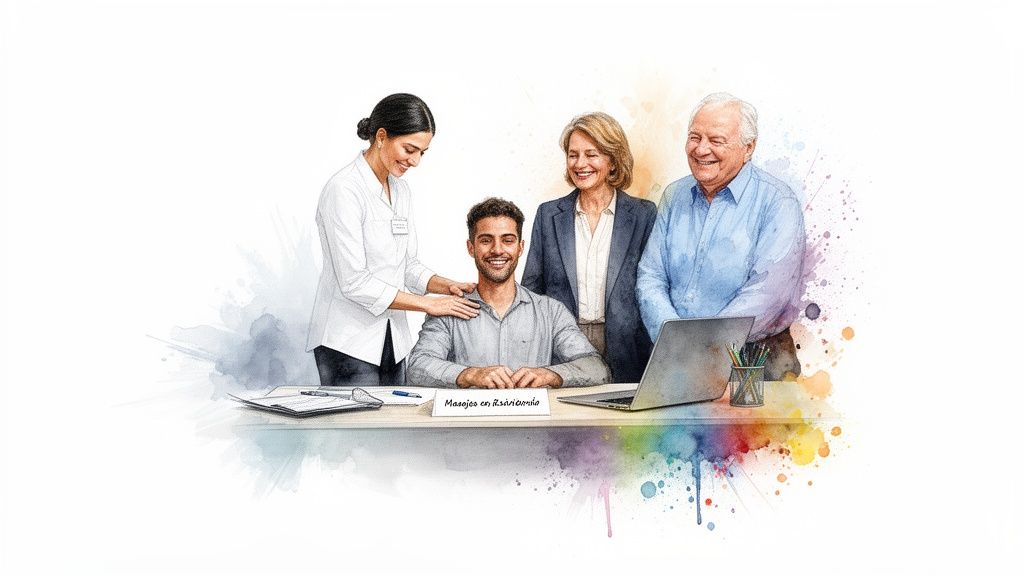
Desk massages are one of the most effective and easily implementable wellness activities for multigenerational teams that an HR department can coordinate. It involves certified therapists coming to the office and providing 15 to 20-minute massages directly at each employee's workspace. This format eliminates the need to change clothes or move to a special room, maximizing participation.
Their great value for diverse teams lies in their universal accessibility. From a Baby Boomer who values practicality and tangible health benefits, to a Millennial or Centennial looking for innovative benefits and a break from digital stress, the desk massage offers a moment of disconnection without drastically interrupting the workday—a quick relief from burnout.
Why Does It Work for Multigenerational Teams?
This activity respects the different preferences and comfort levels that exist among generations. While some employees may be more reserved, the desk massage format (focusing on the neck, shoulders, and back, over clothing) is professional and unobtrusive. Companies like Google and Microsoft have popularized this practice in Mexico, demonstrating its positive impact on workplace climate and the reduction of accumulated stress. To learn more about the logistics and benefits of office massage services, Zen to Go offers a detailed guide.
Practical Tips for HR
Inclusive Communication: Present the activity highlighting relevant benefits for each group. For the older generation, focus on reducing muscle pain from posture; for the younger ones, emphasize combating burnout and improving concentration.
Flexibility in Scheduling: Offer massages at strategic times, such as mid-morning for an energizing break or after lunch to combat afternoon lethargy.
Respect Privacy: Although they are performed at the desk, you can create semi-private stations using dividers for those who prefer more discretion. This is key to encouraging participation from more introverted personalities.
Make It Optional: Wellness cannot be an imposition. Ensure that participation is voluntary so that the experience is genuinely positive and not just another obligation.
2. Multigenerational Guided Meditation Sessions
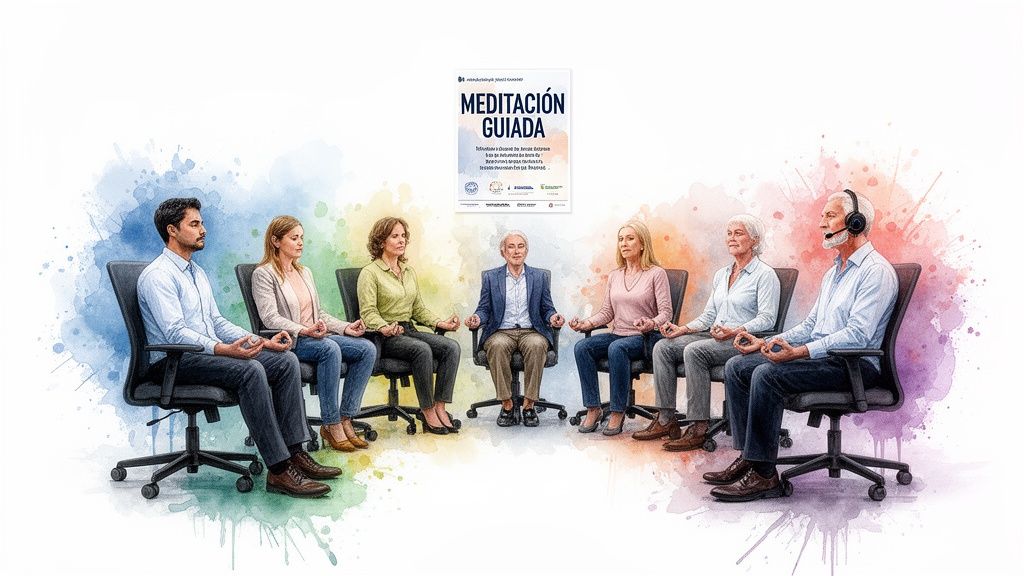
Implementing guided meditation sessions is one of the most powerful wellness activities for multigenerational teams to improve mental health and reduce collective stress. It involves allocating a defined space and time for employees, guided by an instructor or a recording, to practice breathing exercises and mindfulness. Its flexibility allows it to be adapted to in-person, hybrid, or completely remote formats.
The value of this practice in a diverse environment lies in its ability to address stress from different angles. While a Baby Boomer may find it a tool to enhance concentration and calm, a Millennial or Centennial, accustomed to a fast-paced life and digital overload, sees it as an essential resource for managing anxiety and preventing burnout. It’s a low-impact physical activity but a high-impact mental one, fundamental to comply with NOM-035.
Why Does It Work for Multigenerational Teams?
Meditation transcends generational barriers by focusing on a universal human need: inner peace. However, its presentation must be adaptable. Generation Z and younger millennials may prefer access through apps like Calm or Headspace, while Generation X and baby boomers may value more in-person and group sessions. Companies like Unilever Mexico have integrated mindfulness programs to strengthen their teams' resilience, proving that this practice is a pillar of modern emotional salary. To delve deeper into the topic, you can explore these mindfulness practices for the workplace.
Practical Tips for HR
Start with Micro-Sessions: Initiate with short sessions of 10 to 15 minutes to break down the barrier of "I don't have time." This facilitates initial adoption across all generations.
Offer a Hybrid Model: Combine weekly in-person sessions with recordings or access to a complementary app. This grants autonomy to the collaborator and caters to the preferences of those who work remotely or are more introverted.
Create an Appropriate Space: Designate a meeting room as a "calm space" during the sessions. Ensure it's free of distractions, with soft lighting and comfortable seating for everyone.
Focus Communication on Concrete Benefits: When promoting the activity, emphasize how it helps improve focus for the more experienced and how it combats digital anxiety for the younger ones.
3. Shiatsu Chair Massages for Multigenerational Events
Taking wellness beyond the office is key, and Shiatsu chair massages are one of the most impactful wellness activities for multigenerational teams for corporate events. This modality uses specialized ergonomic chairs that allow therapists to work deeply on the back, neck, and shoulders without the participant needing to change clothes, making it a high-value experience that is easy to implement at conferences, health fairs, or year-end events.
The intergenerational appeal is undeniable. A Baby Boomer executive can enjoy tangible muscular relief between presentations, while a Millennial or Centennial employee values the experience as a modern benefit and a chance to "recharge" quickly. The Shiatsu chair becomes an oasis of relaxation amidst the energy of an event, attracting everyone equally.
Why Does It Work for Multigenerational Teams?
This activity perfectly adapts to the dynamics of events, where time is limited and interactions are key. 10 to 15-minute massages offer immediate benefits without compromising the agenda. Technology companies in Monterrey and conference organizers in CDMX have adopted this practice to differentiate their events, creating a relaxed networking space where different generations can meet and connect informally while they wait their turn. The flexibility of adjusting the massage intensity according to user preference is also a crucial factor for its universal success.
Practical Tips for HR
Strategic Location: Place the chairs in a high-traffic area but with enough space to avoid feeling exposed, such as near the coffee area or in a relaxation lounge. This maximizes visibility and participation.
Communication of the Benefit: Use clear signage explaining the quick benefits of the Shiatsu massage: "10 minutes to renew your energy," "Release travel tension." This attracts those who hesitate due to lack of time.
Managing the Wait: Implement a simple turn system (physical or digital) and use the waiting time to share information about other wellness programs offered by the company.
Enhance the Experience: Combine the massages with elements like gentle aromatherapy or relaxing beverages. Encourage participants to share their experience on internal or external social media, showcasing a corporate culture that actively cares for its people.
4. Adapted Yoga Programs for Multigenerational Teams
Adapted yoga has established itself as one of the most inclusive and effective wellness activities for multigenerational teams. Unlike a conventional class, these sessions are designed to accommodate all physical abilities, offering modifications for each pose. A certified instructor guides participants through practices that can be done in a chair, with supports like blocks or standing, ensuring that everyone, regardless of their age or physical condition, can participate safely and beneficially.
Its value for a diverse team is immense. A Gen X employee may seek to relieve back tension accumulated from years of office work, while a Centennial could be more interested in mental health benefits and anxiety reduction. Adapted yoga brings together these objectives, creating a shared wellness space that fosters connection and mutual respect.
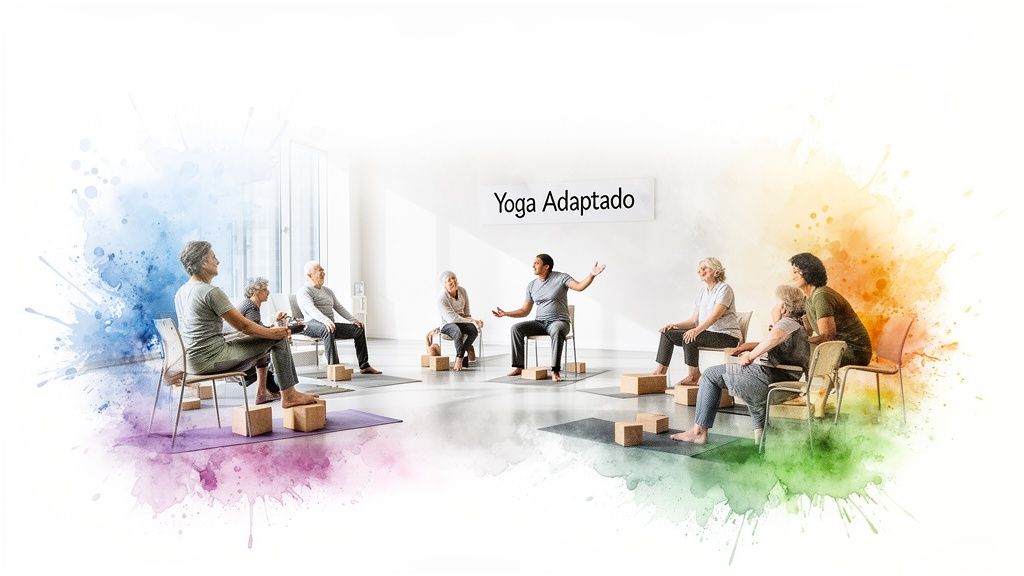
Why Does It Work for Multigenerational Teams?
This activity breaks the physical and mental barriers that often separate generations. By offering variations for each pose, competition is eliminated and an environment of self-acceptance and collective support is encouraged. Technology companies like Apple and Microsoft, as well as large corporations in Monterrey and Guadalajara, have adopted corporate yoga to improve cohesion and reduce stress-related absenteeism. The key lies in its flexibility: it focuses on individual progress within a group experience.
Practical Tips for HR
Look for Certified Instructors: Choose professionals with experience in corporate and adapted yoga. They will know how to manage a group with different needs, ensuring an inclusive and safe session.
Offer Diverse Schedules: Consider morning sessions to energize the day, lunchtime for an active break, or even recorded classes for remote teams or those with flexible schedules.
Provide Basic Equipment: Ensure that mats, blocks, and straps are available. This removes a barrier to entry and demonstrates the company's commitment to the well-being of its people.
Communicate Benefits Correctly: For Baby Boomers, emphasize improvements in flexibility, balance, and joint health. For Millennials and Gen Z, focus on stress management, improving focus, and mind-body connection.
Make It Part of a Comprehensive Program: Combine yoga sessions with brief guided meditations or mindfulness talks to enhance the impact on mental health and offer a more complete solution to burnout.
5. Full Table Massage for Multigenerational Corporate Retreats
Taking the wellness experience to the next level, the full table massage is one of the most impactful and memorable wellness activities for multigenerational teams, designed especially for corporate retreats or recognition events. It involves setting up a professional spa on location, offering each employee therapeutic massages lasting 50 to 60 minutes in private and conditioned spaces.
Its value for a diverse team is invaluable, as it communicates a message of deep appreciation and exceptional care. For a Baby Boomer or a Gen X, it represents tangible and luxurious recognition for their career and dedication. For a Millennial or Centennial, it is a premium experience aligned with their expectations of benefits that go beyond the conventional, strengthening emotional salary and their connection to the company.
Why Does It Work for Multigenerational Teams?
This activity transcends generational barriers by offering a universally desired experience: a total relaxation break in a luxurious setting. It is ideal for retreats in destinations like Riviera Maya, Los Cabos, or Puerto Vallarta, where the ambiance already invites disconnection. Fortune 500 companies and market leaders in Mexico use this strategy to reward achievements, strengthen leadership, and create deep bonds within their teams, demonstrating that the well-being of their employees is a priority investment.
Practical Tips for HR
Prior Consultation: Offer a massage menu (relaxing, deep tissue, etc.) and allow collaborators to choose based on their needs. This personalizes the experience and respects individual preferences.
Create a Relaxation Sanctuary: Work with your provider, such as Zen to Go, to ensure that the environment is perfect, with soft music, aromatherapy, and low lighting. The logistics must be impeccable so that the HR team does not have to worry about anything.
Ensure Trust: Provide information about the certifications and experience of the therapists. Offering the option to choose the therapist's gender is a crucial detail that fosters comfort and participation from everyone.
Extend the Experience: Complement the session with wellness beverages such as herbal teas or infused waters. Consider a post-retreat follow-up with wellness tips to maintain the positive impact.
6. Intergenerational Stress Management Workshops
Implementing workshops focused on stress management is one of the wellness activities for multigenerational teams with the highest strategic impact. These programs, lasting 60 to 90 minutes, go beyond generic techniques and are designed to address the specific stress sources of each generation, creating a space for mutual learning and support. Its value lies in recognizing that stress is not universal; what concerns a Baby Boomer differs from the anxiety of a Centennial.
This activity fosters empathy by allowing employees to understand the unique pressures faced by their colleagues. A Baby Boomer might learn about active aging and the transition to retirement, while Generation X focuses on work-life balance and caring for both parents and children. Millennials and Generation Z receive tools to combat digital burnout and social anxiety, respectively.
Why Does It Work for Multigenerational Teams?
An intergenerational stress management workshop validates the experiences of all, showing that the company cares about their overall well-being and not just their productivity. By segmenting the content, it ensures that the information is relevant and applicable for each individual. Corporate wellness consultancies and the Mexican Association of Organizational Psychology have promoted these formats, as they not only teach relaxation techniques but also improve communication and reduce generational biases by creating a shared understanding of common challenges.
Practical Tips for HR
Prior Diagnosis: Conduct an anonymous survey to identify the main stressors for each demographic group. Use this data to personalize the workshop modules.
Expert Facilitator: Hire an organizational psychologist or a corporate wellness specialist who has experience working with diverse audiences and can moderate sensitive discussions.
Support Material: Provide practical guides, summaries, and exercises for participants to refer to after the session. This reinforces learning and applies the techniques.
Create a Safe Space: Establish rules of confidentiality and respect from the outset. Encourage voluntary participation and create small discussion groups to make employees feel comfortable sharing.
Strategic Follow-Up: Measure the impact through a follow-up survey 3 or 6 months later and consider creating voluntary support groups to keep the conversation going.
7. Holistic Nutrition and Wellness Programs for All Generations
A holistic approach that combines nutrition, physical, and mental wellness positions itself as one of the most complete and impactful wellness activities for multigenerational teams. These programs go beyond a one-off talk, creating a wellness ecosystem that includes nutritional education, access to healthy snacks, and services like massages or meditation to address health comprehensively.
Their main strength is the ability to adapt to the specific needs of each generation. While a Baby Boomer may be interested in preventive nutrition for cardiovascular health, a Millennial could look to optimize their energy and manage stress, and a Centennial may focus more on plant-based diets and sustainability. A comprehensive program offers relevant entry points for everyone, promoting lasting healthy habits.
Why Does It Work for Multigenerational Teams?
This strategy addresses wellness from multiple angles, recognizing that health is not just the absence of illness but a physical, mental, and emotional balance. While nutritional education provides practical and applicable knowledge, combining it with relaxing experiences like body massages creates a positive association and reinforces the message that the company cares for the employee as a whole. Organizations like the Mayo Clinic have shown that a preventive and comprehensive approach is key to long-term health.
Practical Tips for HR
Initial Diagnosis: Conduct anonymous surveys to identify the interests and health needs of the team. Ask about eating habits, stress levels, and wellness topics they would like to explore.
Adapted Messages: Segment communication. Offer workshops on "Nutrition for Sustained Energy" (appealing to younger individuals) and "Nutrition and Bone Health" (relevant for older individuals), ensuring everyone finds value.
Combine Theory and Practice: Don’t limit yourself to talks. Organize healthy cooking classes, hydration challenges with incentives, or tastings of nutritious snacks in the office to make it tangible and fun.
Facilitate Access: Ensure the cafeteria or vending machines offer healthy options. Small changes in the work environment reinforce the program's messages and support the adoption of new habits.
8. Preventive Physiotherapy and Ergonomics Sessions by Generation
Implementing a physiotherapy and ergonomics program is one of the wellness activities for multigenerational teams that is most strategic and has the greatest long-term impact. It consists of postural assessments and preventive sessions conducted by specialists to address the ergonomic risks specific to each age group, from "tech neck" in Generation Z to chronic discomfort in Baby Boomers.
This initiative goes beyond a one-off benefit, becoming a proactive care tool. A Millennial who spends hours in virtual meetings will value tips to avoid back tension, while a Generation X employee will appreciate techniques for managing pre-existing injuries. The goal is to educate and empower each person to integrate healthy habits into their daily life, adapted to their physical and work reality.
Why Does It Work for Multigenerational Teams?
This activity demonstrates a deep understanding of individual needs, a pillar of modern emotional salary. It tackles concrete and generational problems: younger individuals learn to prevent future injuries from extensive device use, while older ones receive support to maintain their quality of life and productivity. Occupational health companies and corporate ergonomics consultants have validated its effectiveness, especially in sectors like call centers or banking corporations where sustained postures are common.
Practical Tips for HR
Initial Group Assessment: Organize an initial group postural assessment session. This is not only efficient but can also be a social activity that breaks the ice and normalizes conversations about physical care.
Segmented Communication: When announcing the program, highlight specific benefits. For younger employees, focus on "hacking your posture to improve your energy"; for older ones, on "taking care of your body for a long and healthy career".
Personalized Material: Provide printed or digital guides with personalized exercise routines and ergonomic recommendations by generation. A simple PDF can have a significant impact.
Structural Adjustments: If the assessments reveal recurring issues (e.g., chair or monitor height), use that data to justify to management the investment in ergonomic furniture.
Periodic Follow-Up: Ergonomic care is not a one-time event. Schedule quarterly or semiannual follow-ups to reinforce habits, address new questions, and measure team progress.
9. Intergenerational Wellness Events with Multiple Stations
Creating a wellness fair or festival is one of the most impactful and customizable wellness activities for multigenerational teams. The idea is simple yet powerful: instead of offering a single activity, multiple simultaneous stations are organized where each person chooses which experience to enjoy. This can include anything from chair massages and reflexology to nutrition workshops, guided meditation sessions, or short restorative yoga classes.
This format celebrates the diversity of a multigenerational team by allowing each employee to design their own wellness path. A Baby Boomer may prefer a workshop on ergonomics and a reflexology session, while a Centennial may be more attracted to a healthy snack station and a 15-minute meditation. The freedom of choice eliminates pressure and maximizes engagement, turning wellness into a positive experience rather than a corporate obligation.
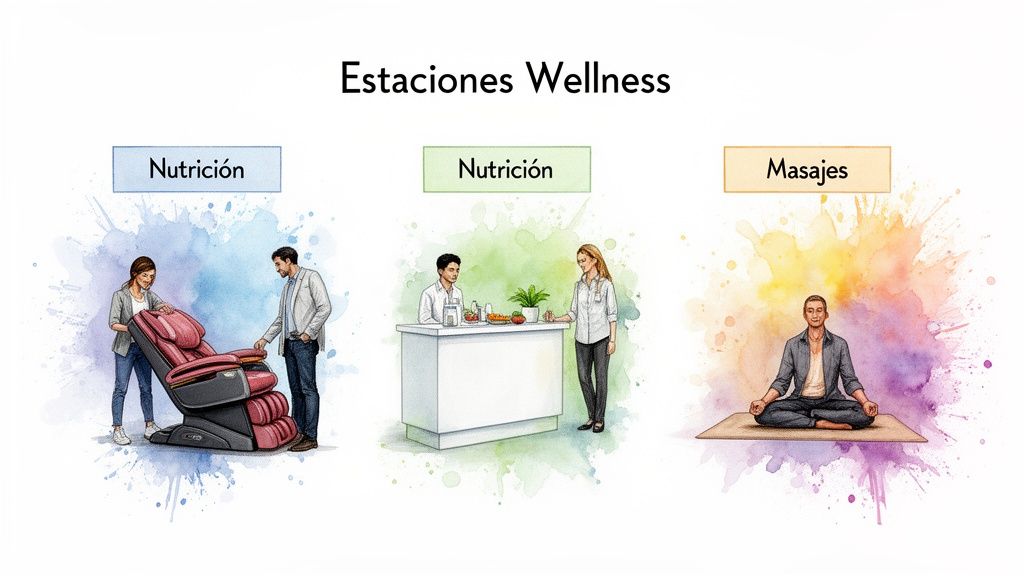
Why Does It Work for Multigenerational Teams?
The key to the success of this format is autonomy. By offering a menu of options, the company respects the different needs, interests, and fitness levels of its employees. A senior employee may not feel comfortable with an active yoga class, but will value a quick nutritional consultation. This flexibility demonstrates a deep understanding of generational diversity. In our experience, at Zen to Go we have found that these events are a key tool for strengthening organizational culture.
Practical Tips for HR
Prior Survey: Before the event, launch a simple survey to gauge which types of activities generate the most interest. This will help you design an offering that truly resonates with your team.
Map and Signage: Create a clear and visible map of the stations. Good signage facilitates employees' movement and ensures they make the most of the time available.
Free Flow: Avoid rigid schedules. Allow people to move between stations at their own pace, fostering a relaxed and exploratory atmosphere.
Strategic Communication: Promote the event in advance, highlighting the variety of stations. Build anticipation by describing the benefits of each activity to attract all profiles.
Instant Feedback: Place QR codes at each station so that participants can quickly leave their feedback. This information is invaluable for planning future events.
10. Intergenerational Mentoring Programs Complemented with Wellness
Intergenerational mentoring programs are one of the most strategic and profound wellness activities for multigenerational teams. The initiative consists of connecting employees from different generations in a professional mentoring relationship, complemented by shared wellness activities. Rather than a simple transfer of knowledge, this dynamic fosters a real human connection where both mentor and mentee benefit mutually.
Its value lies in breaking generational silos and leveraging collective wisdom. A Baby Boomer or Gen X can guide a young talent in career development and leadership skills, while a Millennial or Centennial can offer fresh perspectives on technology, new ways of working, and work-life balance. Integrating activities like wellness walks or meditation sessions into their meetings turns mentoring into a comprehensive experience that cares for both professional development and personal wellness.
Why Does It Work for Multigenerational Teams?
This activity recognizes that learning is bidirectional and that each generation possesses invaluable knowledge capital. Technology companies like Google and LinkedIn have shown how these connections strengthen organizational culture, accelerate talent development, and improve retention. By integrating the wellness component, a safe and relaxed space is created that facilitates more authentic and profound conversations, going beyond mere review of work objectives. For a broader view on how to integrate these ideas, you can explore how to design a workplace wellness program that truly works.
Practical Tips for HR
Cautious Pair Selection: Conduct a matching process based not only on skills and areas for development but also on personal interests and personality compatibility to ensure a genuine connection.
Define Clear Objectives: Establish from the beginning what is expected from the relationship (career development, soft skills, technical knowledge) and how wellness activities will support those goals.
Guide for Conversations: Provide participants with a guide containing suggested topics for their initial meetings, helping to break the ice and focus conversations productively.
Flexibility in Activities: Allow pairs to choose the wellness activities they are most interested in, from having coffee in a park to participating in a corporate yoga class. This increases commitment and personalization of the program.
Comparison: 10 wellness activities for multigenerational teams
Service | 🔄 Implementation complexity | ⚡ Resources / Cost | ⭐ Expected results | 📊 Ideal cases | 💡 Key advantage |
|---|---|---|---|---|---|
Intergenerational Desk Massages | Low: simple logistics and brief sessions | ⚡ Accessible; mobile therapist; minimal space; 15–20 min | ⭐⭐⭐: quick relief from neck/back tension | Offices with continuous shifts; short work breaks | 💡 Offer optional sessions and semi-private stations |
Multigenerational Guided Meditation Sessions | Low–Medium: coordinating schedules and formats (in-person/virtual) | ⚡ Low–Medium; facilitator and digital material; 10–15 min | ⭐⭐⭐⭐: reduces anxiety and improves focus with consistency | Hybrid teams; moments before/after lunch | 💡 Start with short sessions and record for asynchronous access |
Shiatsu Chair Massages for Multigenerational Events | Medium: logistics of equipment and space at events | ⚡ Medium–High; electric chairs, electricity, and operator; 10–15 min | ⭐⭐⭐: immediate appeal and practical relaxation | Fairs, launches, wellness days | 💡 Locate stations in high-flow areas and offer educational information |
Adapted Yoga Programs for Multigenerational Teams | Medium: requires a certified instructor and suitable space | ⚡ Medium; mats, props, instructor; 30–45 min | ⭐⭐⭐⭐: improves flexibility, balance, and reduces stress | Regular sessions in large offices or retreats | 💡 Offer modifications and recorded material for remote attendees |
Full Table Massage for Corporate Retreats | Medium–High: logistical planning and private spaces | ⚡ High; expert therapists, private rooms, 50–60 min | ⭐⭐⭐⭐⭐: deep therapeutic benefits and premium experience | Corporate retreats and recognition events | 💡 Include prior consultation and massage options according to preference |
Intergenerational Stress Management Workshops | Medium: custom content design by generation | ⚡ Low–Medium; expert facilitator and printed/digital material; 60–90 min | ⭐⭐⭐⭐: sustainable education that reduces long-term burnout | Internal training, wellness programs | 💡 Conduct prior surveys and follow-up 3–6 months later |
Holistic Nutrition and Wellness Programs for All Generations | Medium: coordination with nutritionists and complementary services | ⚡ Medium; talks, consultations, adapted materials and menus | ⭐⭐⭐⭐: improves energy, prevents chronic diseases | Companies with cafeterias or interest in prevention | 💡 Conduct initial diagnosis and combine education with practical experiences |
Preventive Physiotherapy and Ergonomics Sessions by Generation | Medium–High: individual evaluations and ergonomic adjustments | ⚡ Medium–High; specialists, time for evaluations; 30–45 min | ⭐⭐⭐⭐: prevents injuries and reduces workplace absenteeism | Call centers, desks with high postural load | 💡 Conduct postural assessments and quarterly follow-ups |
Intergenerational Wellness Events with Multiple Stations | High: logistical coordination and multiple providers | ⚡ High; large space, various suppliers, 2–4 hours of event | ⭐⭐⭐⭐: high impact, inclusivity, and exploration of services | Wellness days, corporate anniversaries | 💡 Plan station maps and collect digital feedback |
Intergenerational Mentoring Programs with Wellness | Medium: pair selection and activity scheduling | ⚡ Low–Medium; peer time, facilitation; monthly meetings | ⭐⭐⭐⭐: improves retention, knowledge transfer, and wellness | Talent development and retention initiatives | 💡 Define clear objectives and schedule regular wellness activities |
The Next Step: Make Wellness Your Best Strategic Ally
We have explored a diverse range of wellness activities for multigenerational teams, from the immediacy of a desk massage to the depth of a mentoring program. Each of these ten proposals represents a powerful tool to build bridges between Baby Boomers, Generation X, Millennials, and Centennials, demonstrating that wellness has no age, only adaptations. The common thread is clear: personalization and flexibility are the pillars of any wellness strategy aspiring to be inclusive and, above all, effective.
Ignoring generational differences in the workplace is no longer an option; it’s a lost opportunity. Implementing a wellness program that acknowledges and celebrates this diversity transforms the employee's perception from being just "another benefit" to a strong statement that the company sees, hears, and values each person for who they are, with their unique needs and expectations. This approach not only combats burnout and reduces absenteeism but also becomes a magnet for attracting and crucially, retaining the best talent in an increasingly competitive labor market.
From Idea to Action: Your Roadmap
The real challenge for HR leaders is not understanding the importance of wellness but how to implement it in a way that generates measurable and sustainable impact. The pathway to a successful program can be summarized in the following key steps:
Accurate Diagnosis: Before launching any initiative, conduct surveys or focus groups to understand the real needs of your teams. Directly ask what activities would interest them and what barriers they perceive. Segment responses by generation to identify patterns and preferences.
Flexible and Modular Design: You don’t need to implement everything at once. Start with a pilot, like chair massage sessions or a stress management workshop. Design a program that allows collaborators to choose activities, creating a "wellness menu" that adapts to different tastes and schedules.
Strategic Communication: Communicate the "why" behind the program. Link wellness activities to business objectives and the company's values. Ensure that leaders at all levels participate and promote initiatives to lead by example.
Continuous Measurement and Adjustment: Success is measurable. Define key performance indicators (KPIs) from the start. They can be participation metrics, post-activity satisfaction surveys, or their correlation with HR indicators such as voluntary turnover or workplace climate. Use this data to adjust and optimize your strategy.
Wellness as a Driver of a Connected Culture
In our experience working with HR teams of various sizes in Mexico since 2019, we have seen time and again that the most successful companies are those that understand wellness as a strategic investment, not a cost. Wellness activities for multigenerational teams act as a catalyst, breaking down silos and fostering a culture of empathy and collaboration. When a Millennial and a Baby Boomer share a meditation session or learn together about ergonomics, a human connection space is created that transcends hierarchies and age differences.
"A well-executed wellness program not only improves the health of employees but also strengthens the social fabric of the organization. It becomes the tangible manifestation of a culture that puts people first."
Taking on this challenge positions Human Resources as a true strategic partner in the business. It demonstrates through actions that caring for your people is the smartest way to safeguard your results. It’s not about offering the latest trend, but about building a supportive ecosystem that allows every collaborator, regardless of their generation, to reach their full potential. Wellness is the new standard for modern and humane talent management.
Ready to transform your team's wellness into a growth engine? At Zen to Go, we are experts in designing and implementing corporate wellness programs that adapt to the unique needs of your multigenerational teams. Let us be your strategic ally in creating memorable and high-impact experiences with flawless operation that will free up time and resources for you. Contact an advisor and discover how we can help you build a healthier and more productive culture.